
Last updated September 22, 2026
Level 1 sweep and inspection to the NFPA 211 annual standard - flue, crown, cap, and flashing checked and photographed
Chimney sweep logs do not sweep chimneys. They loosen some creosote - which then falls where a brush and vacuum still have to collect it.
 Before
 After
After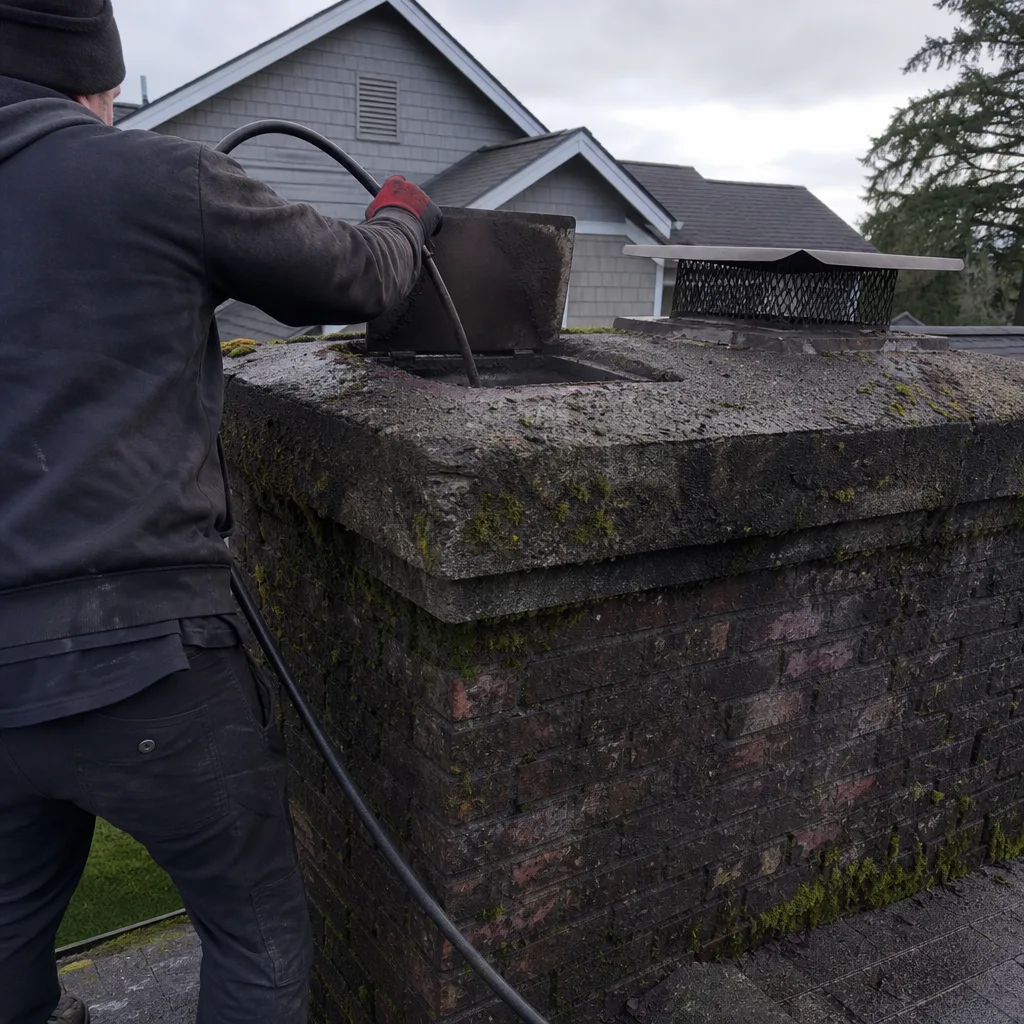 Before
 After
After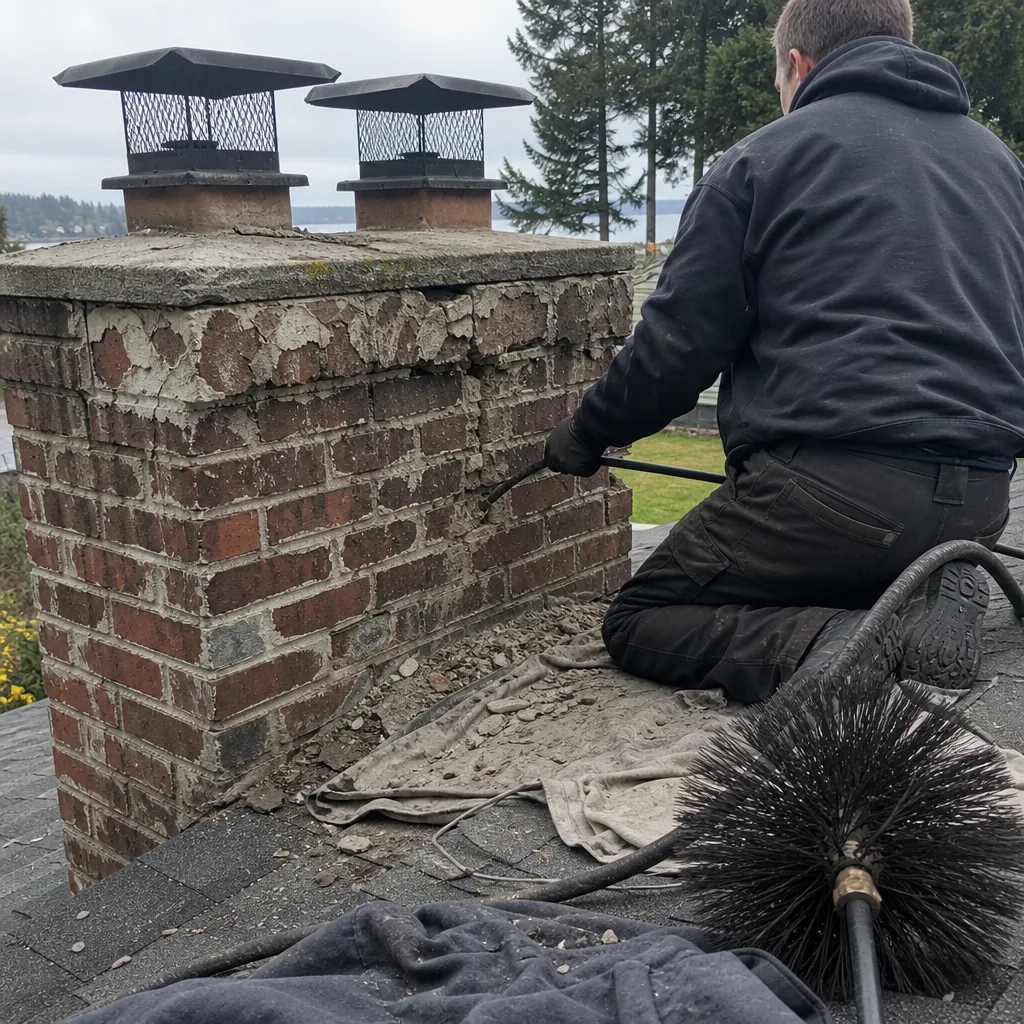 Before
 After
AfterThe Complete Guide to Chimney Cleaning in Bellevue
The NFPA estimates that 25% of home heating fires involve chimneys that were “cleaned” within the past year. That statistic only makes sense once you understand what most Bellevue homeowners actually paid for: a brush run down from the roof, maybe a shop-vac at the hearth, and no documentation of what was found. The cleaning happened. The inspection that should have preceded it didn’t. In a city where Pacific storms drive moisture into masonry nine months of the year, that distinction matters more than most places. This guide walks through what a complete chimney cleaning actually includes, why the camera inspection is non-negotiable, and how to read the completion document so you know whether you received a service or a performance. For seasonal chimney cleaning care specific to Bellevue’s year-round conditions, see our dedicated homeowner’s guide.
Quick Answer
A complete chimney cleaning in Bellevue includes an NFPA 211 Level 2 camera inspection of the flue liner, smoke chamber, and accessible exterior masonry; mechanical removal of creosote deposits classified by stage; and a written completion report with photo documentation. Most Bellevue homeowners pay between $249 and $389 for a standard cleaning with Level 2 inspection, with Stage 3 creosote removal or liner damage repairs quoted separately in writing before any additional work begins.
Table of Contents
- What a Complete Chimney Cleaning Actually Includes
- NFPA 211 Level 2 vs. a Standard Sweep: What Bellevue Homeowners Get
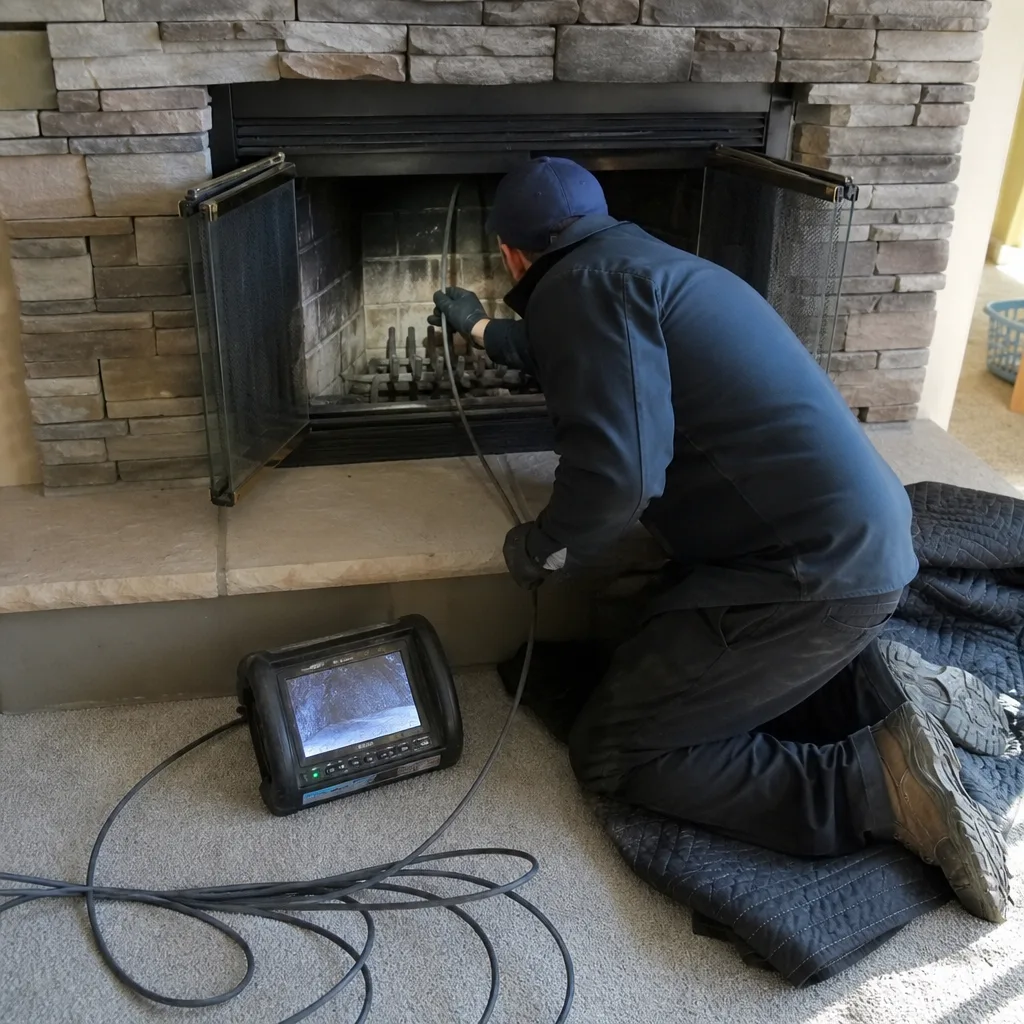
- The Role of a Flue Camera in a Complete Cleaning
- How to Read a Post-Cleaning Report in Washington State
- Creosote Classification and How It Changes Your Price
- Why Chimney Cleaning Is Insurance Documentation, Not Just Maintenance
- How Bellevue’s Climate Affects What Your Chimney Needs
- Choosing a Chimney Cleaning Provider in Bellevue
 Before
 After
AfterWhat a Complete Chimney Cleaning Actually Includes
When we say “chimney cleaning” at Level Two Chimney Bellevue home, we mean a documented process with four distinct phases. Skip any one of them and you’re not receiving a complete service, regardless of what the invoice says.
Phase 1: Pre-cleaning camera inspection. Before a brush touches the flue, we run a high-resolution camera the full length of the liner. We’re looking for cracks, gaps, spalling (surface flaking of clay tile), joint separation, and any obstruction from animal nests or collapsed liner sections. In Bellevue’s older neighborhoods like West Bellevue and the Bridle Trails area, we regularly find clay tile liners installed in the 1960s and 1970s that have developed vertical cracks from thermal cycling. Finding this before cleaning prevents us from driving brushes through a compromised liner and making the damage worse.
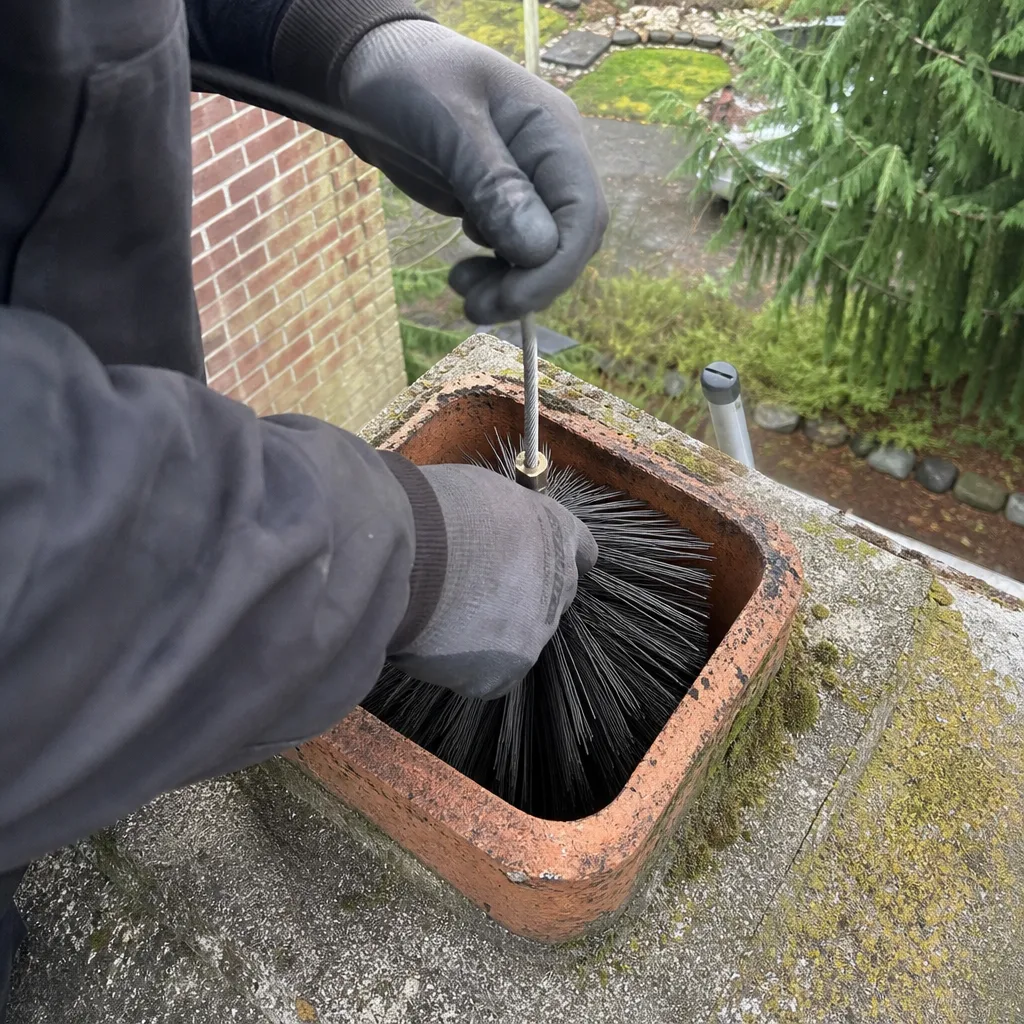
Phase 2: Mechanical creosote removal. We classify the deposit type first, then select the appropriate tool: polypropylene brushes for Stage 1 powdery soot, chains and whips for Stage 2 glazed creosote, or specialized chemical treatment followed by mechanical removal for Stage 3 tar-like deposits. Each stage requires different equipment and different time on the job.
Phase 3: Smoke chamber and firebox cleaning. The smoke chamber, the area above the firebox that funnels smoke into the flue, collects creosote in angles that standard brushes miss. We hand-scrape this area and vacuum all debris. The firebox gets inspected for cracked refractory panels or damaged mortar joints.
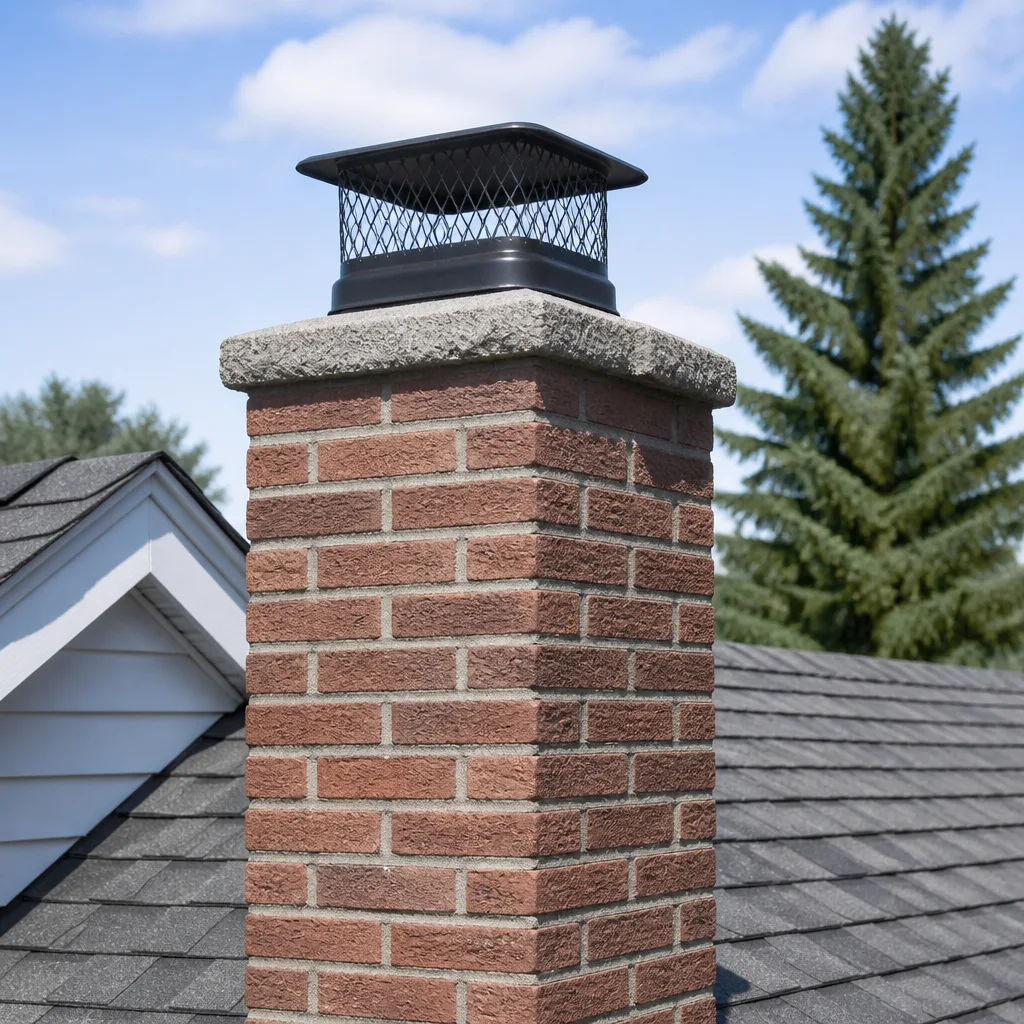
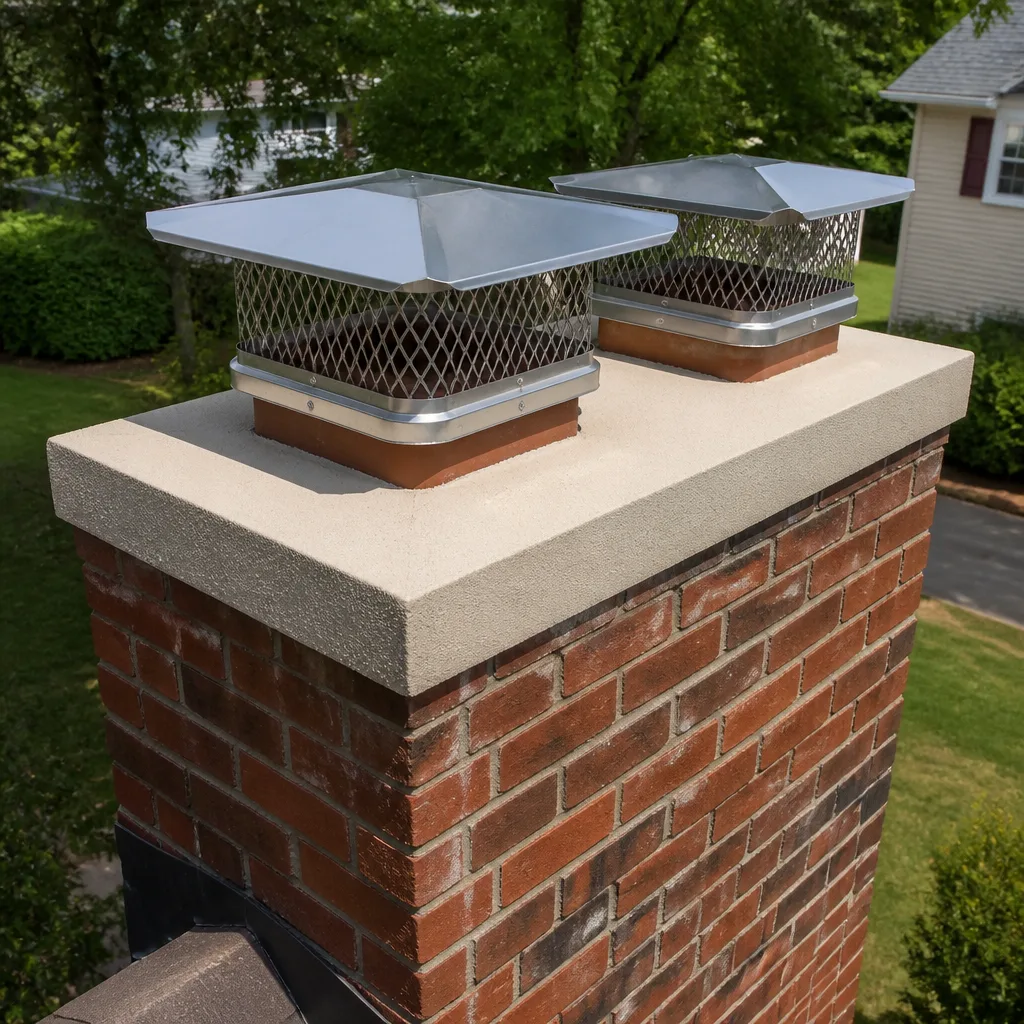
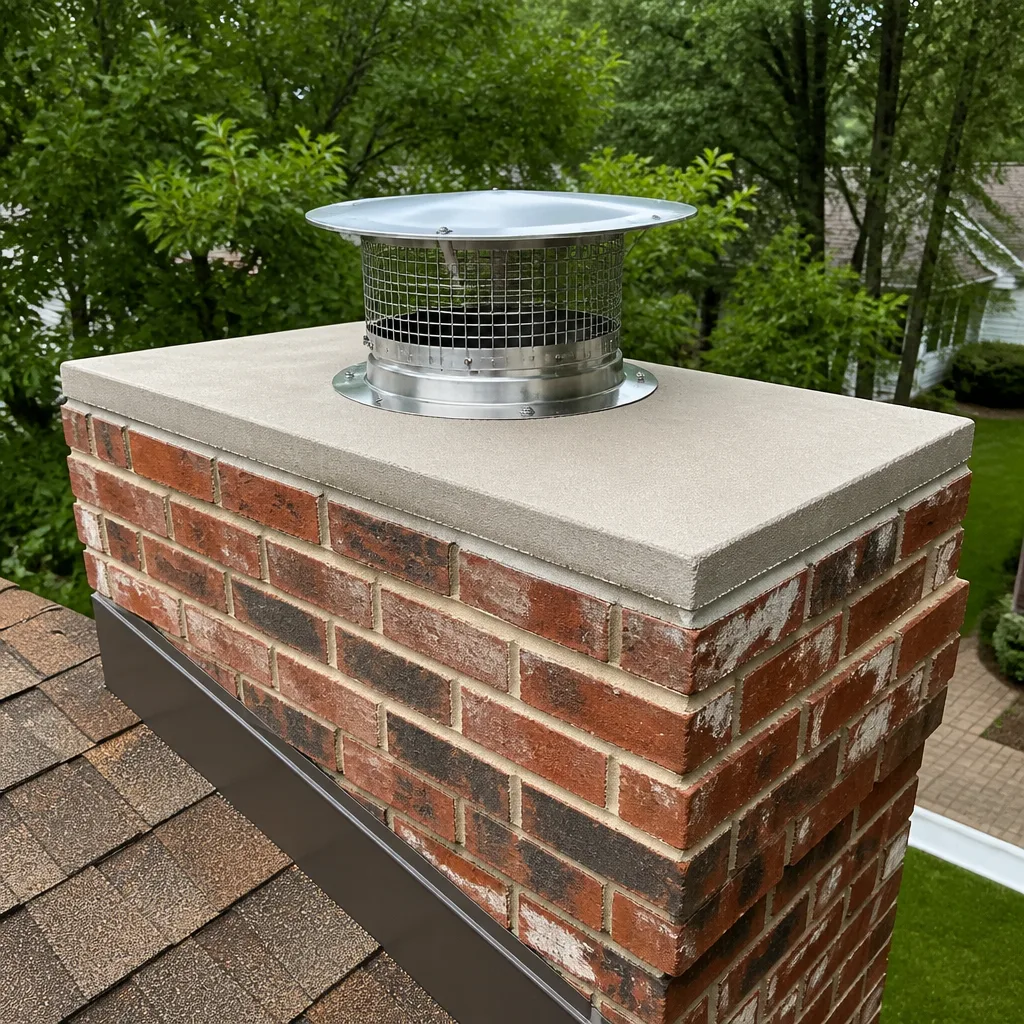
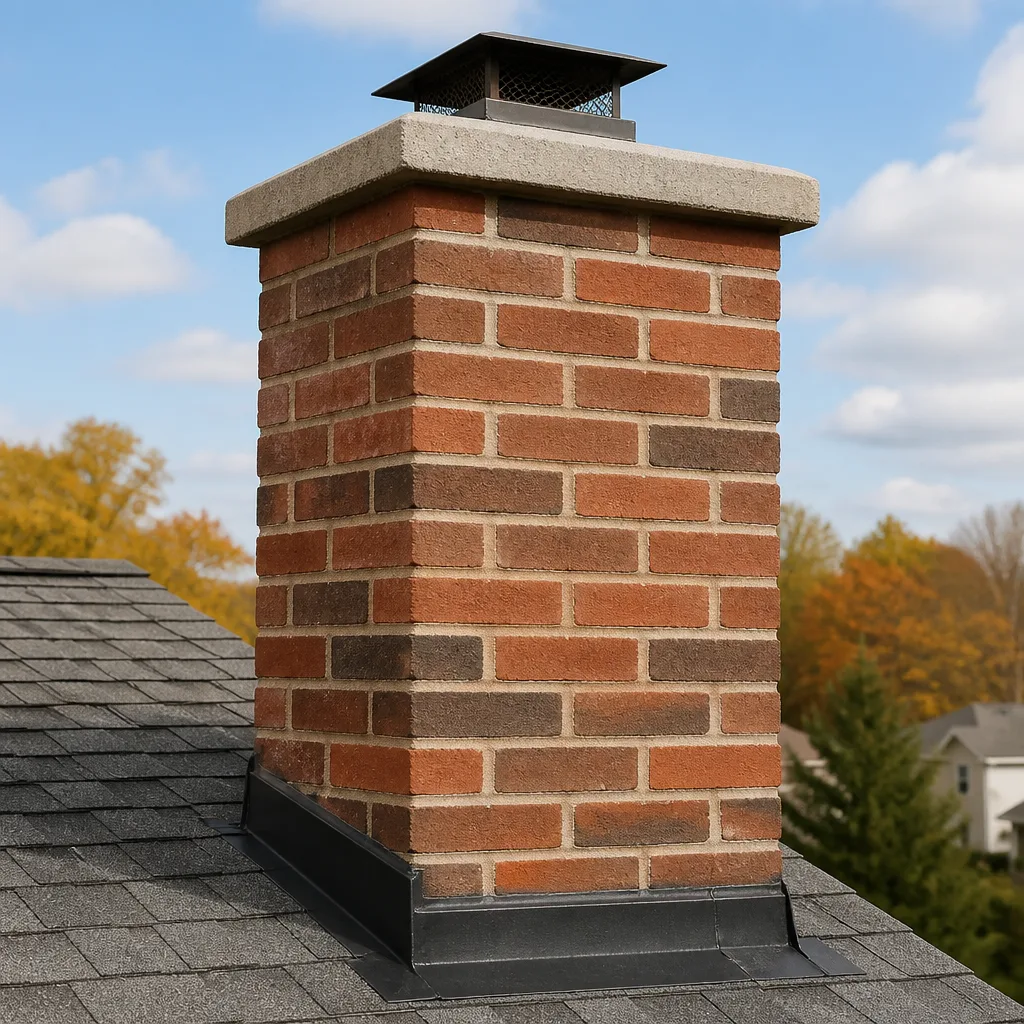
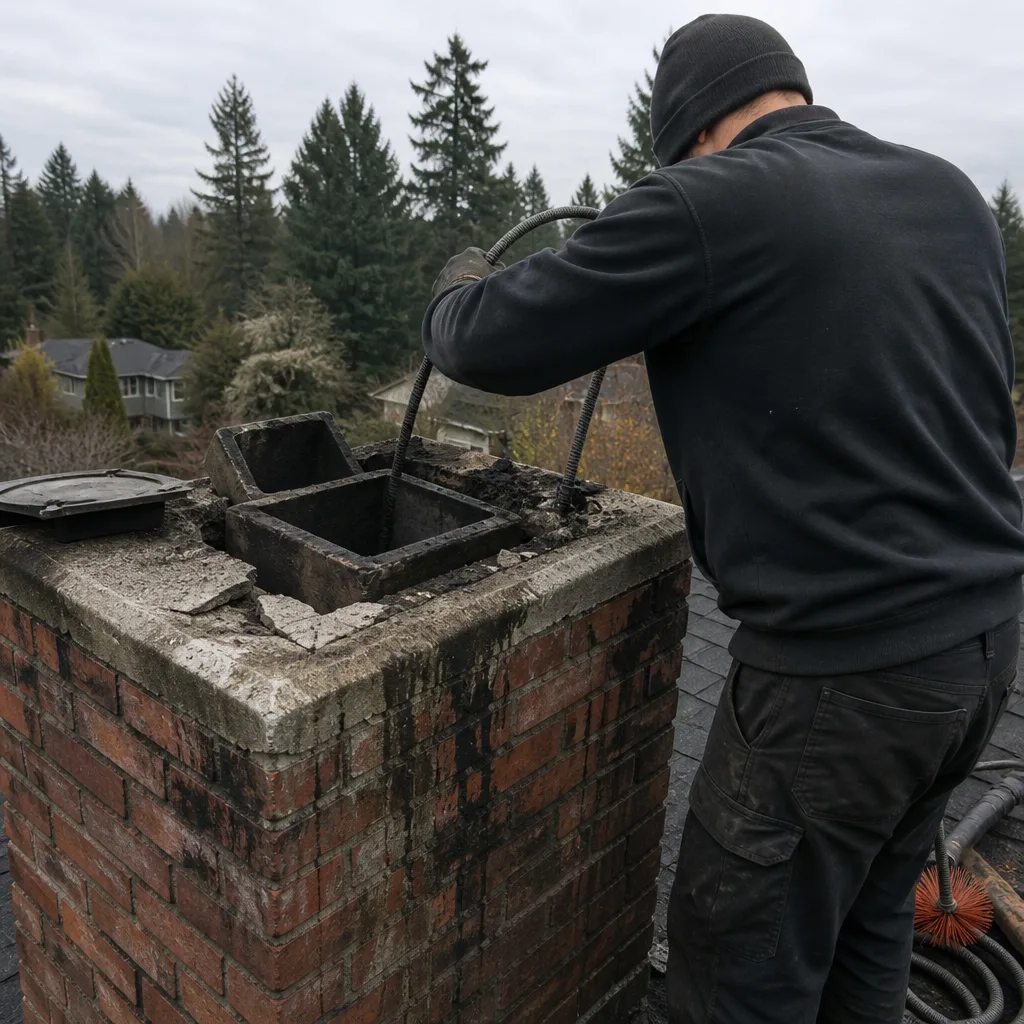
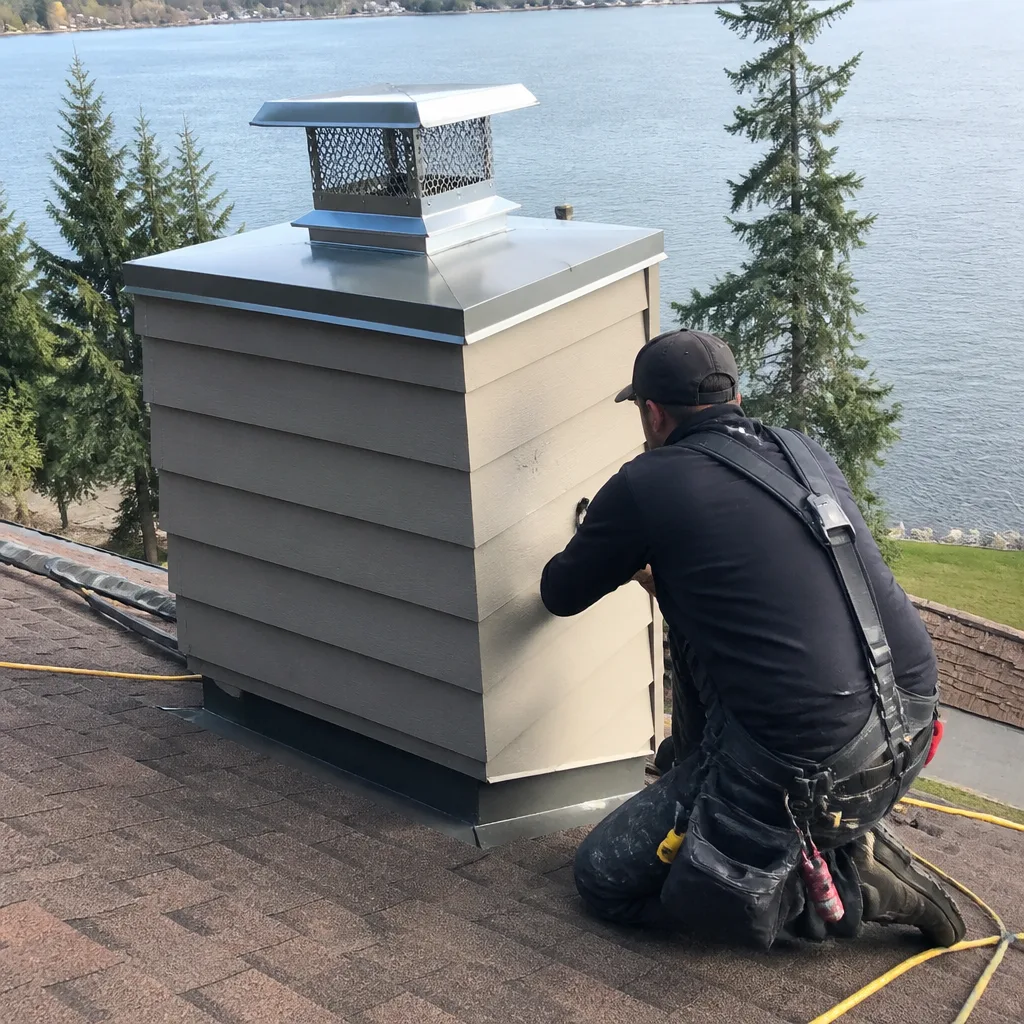
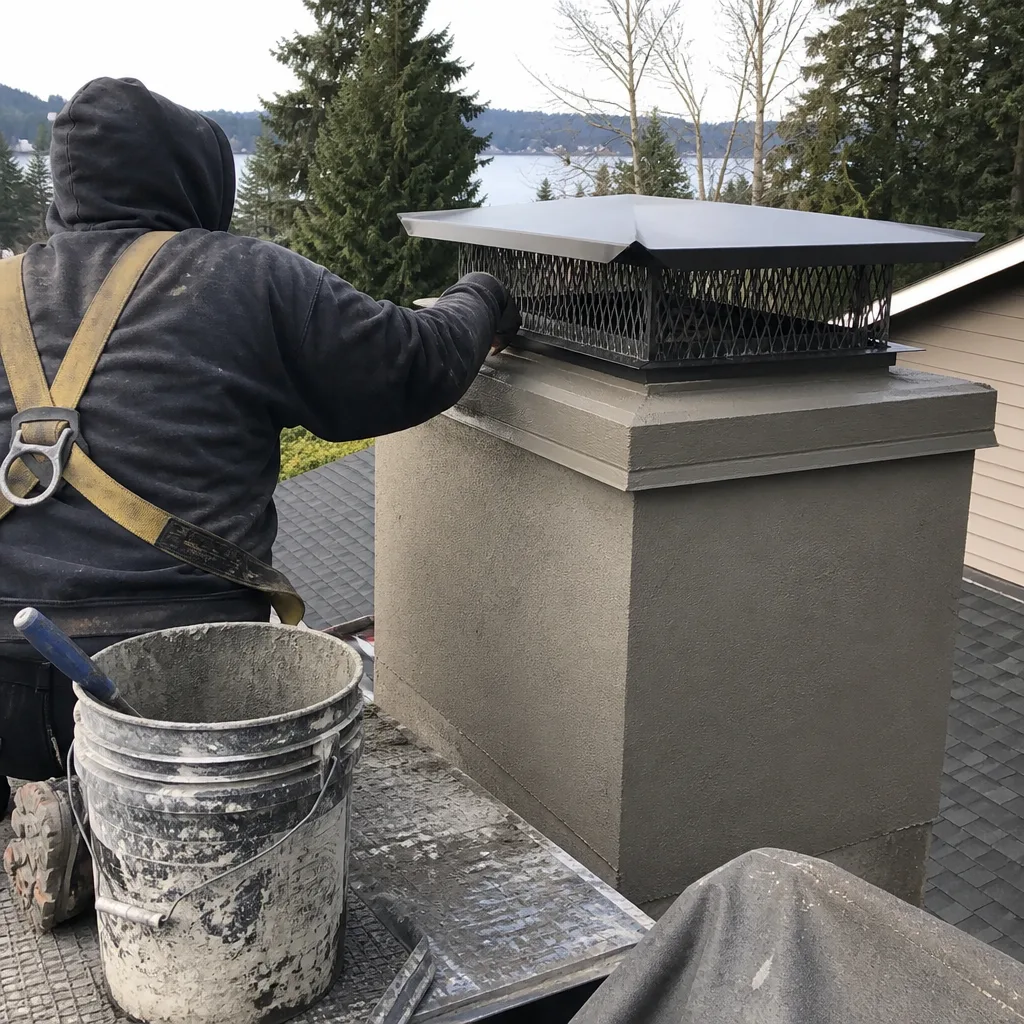
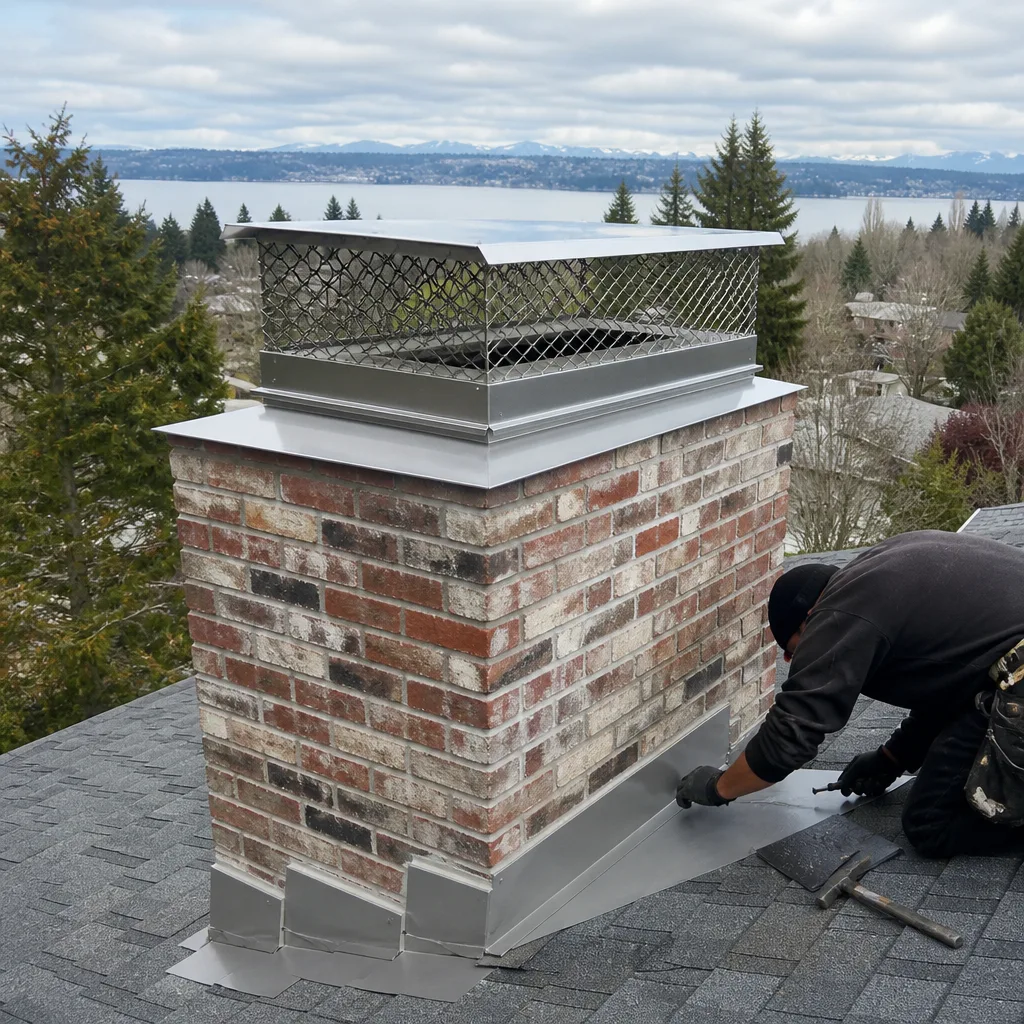
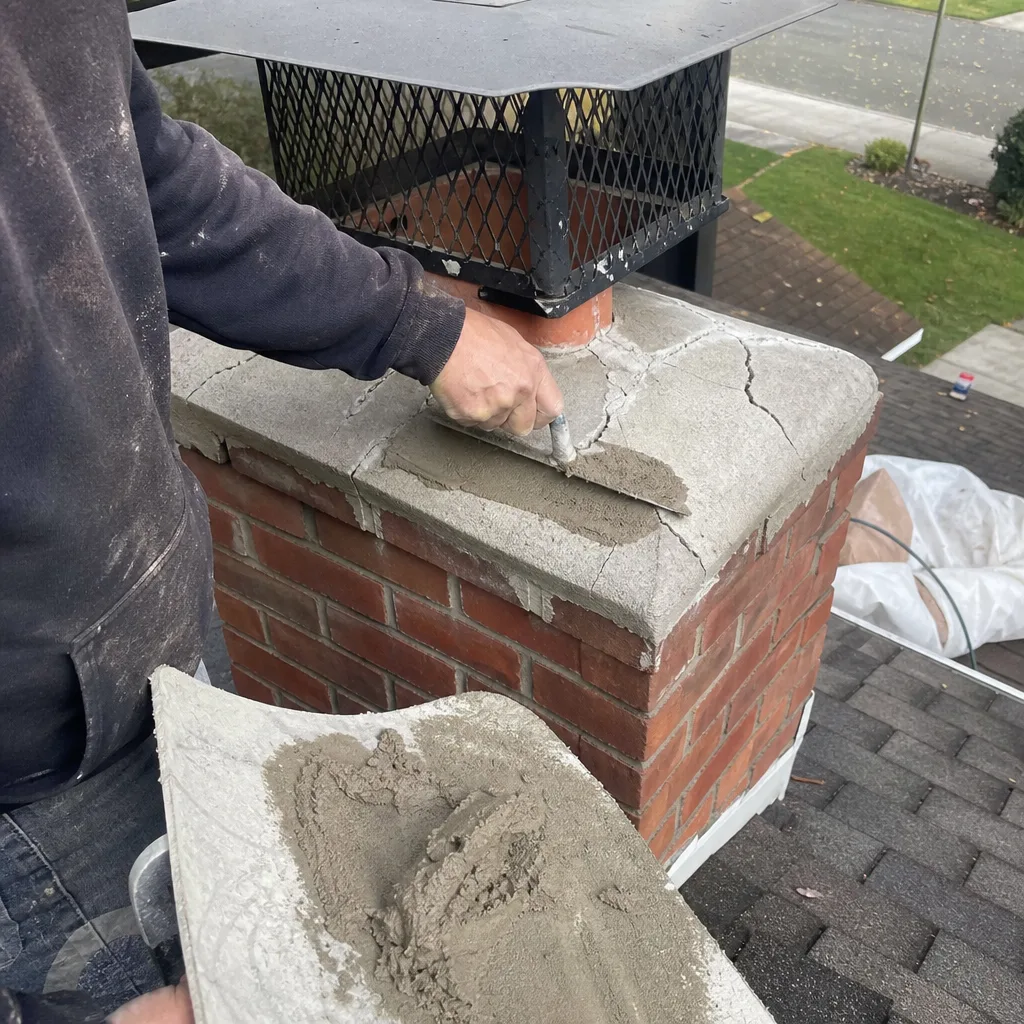
Phase 4: Exterior evaluation and documentation. We examine the crown, cap, flashing, and visible masonry from roof level or ground with optics. In Bellevue, where rainfall averages 39 inches annually, crown deterioration and flashing separation are common findings that directly affect whether water is entering the system.
Clause 4 of the Haven Standard requires a photo record on every job. That means the customer receives dated images of the flue condition before cleaning, after cleaning, and any exterior concerns noted. We’ve maintained this practice since 2009, before it became a regulatory expectation or an insurance requirement.
NFPA 211 Level 2 vs. a Standard Sweep: What Bellevue Homeowners Get
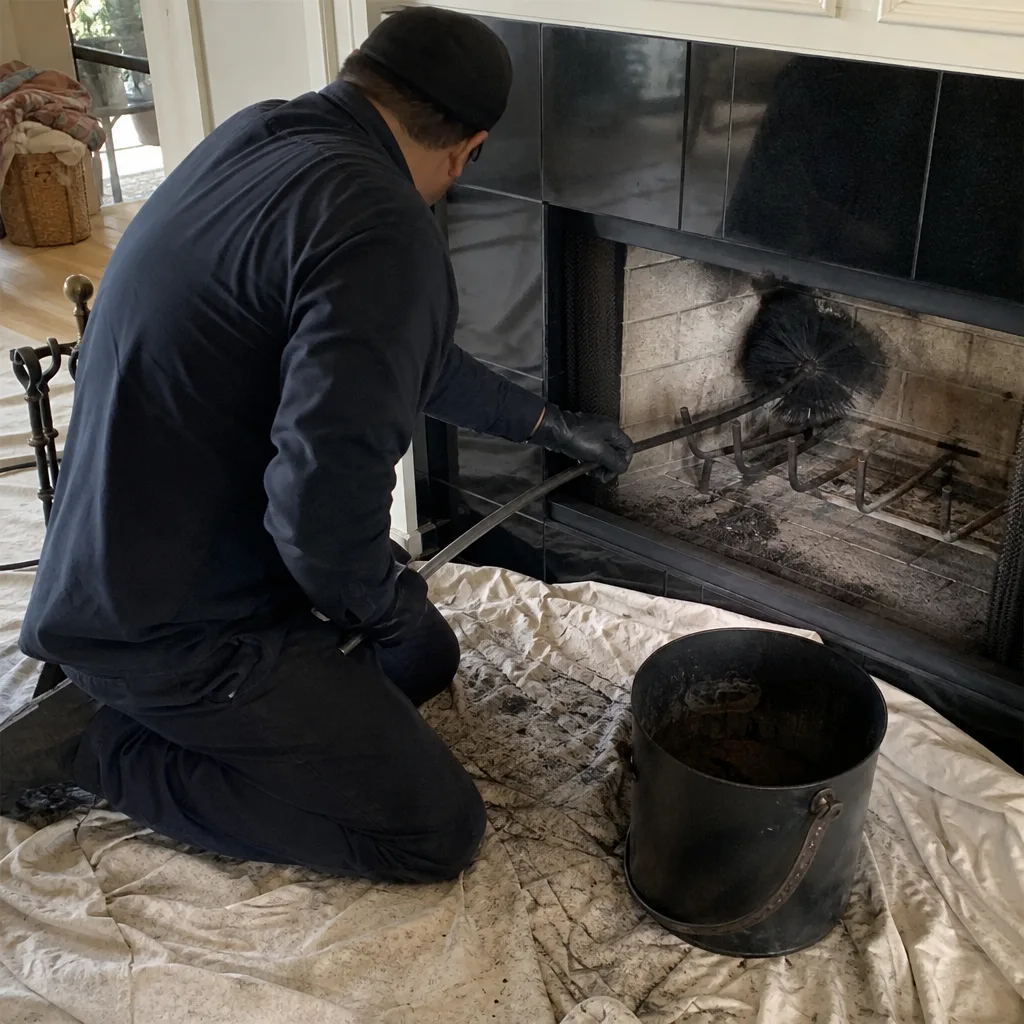
The National Fire Protection Association publishes Standard 211, which defines three levels of chimney inspection. Most “sweep” companies in the Bellevue market perform what amounts to a Level 1: a visual check of readily accessible portions without tools, followed by brushing. A Level 2 inspection is substantially more rigorous and is specifically required when a property changes hands, after a chimney fire or seismic event, or when any alteration is made to the system.
Here’s the practical difference for a Bellevue homeowner:
| Element | Standard Sweep (Level 1) | Complete Service (Level 2) |
|---|---|---|
| Flue interior | Flashlight look from top or bottom | Camera scan full length, recorded |
| Smoke chamber | Visual if accessible | Inspected and documented |
| Attic/crawl space | Not examined | Accessible portions inspected |
| Exterior masonry | Ground-level visual | Close inspection with documentation |
| Written report | Often none, or generic checklist | Dated photo record with findings |
| Typical Bellevue price | $89-$149 | $249-$389 |
The price gap reflects real differences in time, equipment, and liability. A Level 1 sweep takes 30-45 minutes. Our Level 2 cleaning with full documentation averages 90-120 minutes. The camera equipment alone represents a five-figure investment that many low-price competitors simply haven’t made.
Bellevue’s building stock makes Level 2 particularly relevant. Homes in neighborhoods like Newport Hills and Somerset were built across five decades with varying liner materials: unlined brick in pre-1960s construction, clay tile through the 1980s, and stainless steel or cast-in-place liners in newer builds. Each material fails differently, and flashlight inspection won’t distinguish between a sound clay tile joint and one that has opened to expose the surrounding masonry.
Manufacturer warranties for factory-built fireplaces and stainless steel liners typically require annual inspection by a qualified professional. Most specify that the inspection must include examination of the full flue interior. A Level 1 sweep with no camera documentation generally doesn’t satisfy this requirement, which means a homeowner could discover, after a fire, that their warranty is void and their insurance is contested.
The Role of a Flue Camera in a Complete Cleaning
The flue camera is not a verification tool used after cleaning. It’s a diagnostic tool used before cleaning, and that sequencing matters for both safety and warranty protection.
Here’s what the camera finds that determines how we proceed:
- Liner cracks and gaps. A crack in a clay tile liner can open a direct path from flue gases to combustible framing. In Bellevue’s moisture-heavy environment, we also see freeze-thaw expansion widening existing cracks during winter cold snaps. Brushing a cracked liner can dislodge tile fragments that obstruct the flue.
- Joint separation. Clay tile liners are installed in 2-foot sections with refractory mortar joints. Over decades, thermal expansion and house settling can open these joints. The camera reveals the gap width and whether flue gases are escaping into the chimney cavity.
- Glazed creosote buildup. Stage 2 and Stage 3 creosote have distinct visual signatures. Stage 2 appears as shiny, hardened layers. Stage 3 is thick, tar-like, and often dripped or pooled. The camera lets us classify the deposit before we quote removal, so the homeowner knows whether standard brushing suffices or chemical treatment is needed.
- Obstructions and debris. We’ve found bird nests, collapsed liner sections, and in one Bellevue home near Lake Hills, a bee colony that had entered through a missing cap and built comb across the smoke chamber. Brushing blindly would have compressed the obstruction and potentially blocked the flue entirely.
- Liner displacement. In factory-built metal chimneys, the camera reveals whether inner liner sections have slipped from their joints, a condition that allows flue gases to enter the insulation layer and overheat the outer wall.
Skipping the camera inspection doesn’t just miss these conditions. It actively risks making them worse. A brush driven through a cracked clay tile can wedge fragments into the flue throat. Chemical treatment applied without knowing the liner condition can damage exposed masonry. And from a documentation standpoint, the homeowner has no baseline record of what existed before the service began.
Clause 4 of the Haven Standard requires that photo record precisely because disputes arise. When a homeowner sells a Bellevue property and the buyer’s inspector flags a liner condition, the seller needs dated documentation of what was known and when. The camera record provides that. A sweep with no camera provides nothing.
How to Read a Post-Cleaning Report in Washington State
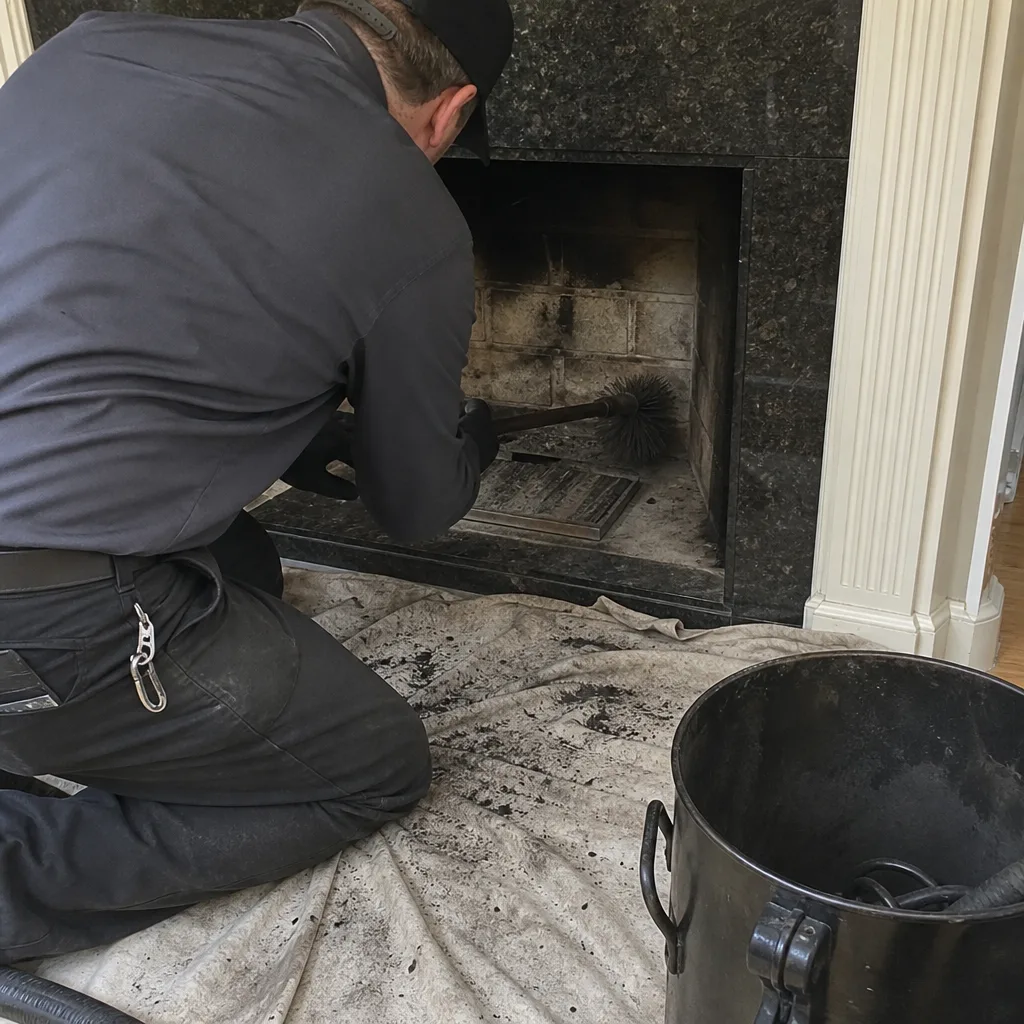
Washington State does not mandate a specific format for chimney cleaning completion documents, which means quality varies enormously. A legitimate report from any Bellevue provider should contain five specific items. If any are missing, the service is incomplete.
Item 1: Dated photo documentation of the flue interior. Not a generic stock image. Date-stamped images showing the full flue length, typically captured every 12-18 inches or as a continuous video file. The images should be clear enough to distinguish liner material, joint condition, and any remaining deposits after cleaning.
Item 2: Creosote classification and removal method. The report should state whether deposits were Stage 1, 2, or 3, and what method was used for removal. “Chimney cleaned” is not sufficient. “Stage 1 powdery soot removed with polypropylene brushes; Stage 2 glazing noted at throat, chemically treated and mechanically removed” is sufficient.
Item 3: Liner condition assessment. A statement of liner material, approximate age if known, and condition rating: sound, monitor, repair recommended, or replacement required. For clay tile, note any cracked, spalled, or missing tiles by position (e.g., “third tile from top, south face”).
Item 4: Exterior component status. Crown condition, cap presence and type, flashing integrity, and any visible masonry deterioration. In Bellevue, where crown wash (the sloped concrete top) typically lasts 10-15 years in this climate, the report should note whether the crown is sound, cracked, or requiring rebuild.
Item 5: Written scope and warranty for any recommended work. If repairs are advised, the report must include a separate written quote with itemized pricing, materials specified by brand or type, and warranty terms. At Level Two Chimney Bellevue, this is Haven Standard Clause 1: the written price, written scope, and written warranty delivered before any work begins.
We’ve reviewed competitor reports from Bellevue homeowners who requested our Chimney Repair in Bellevue second opinion. Some contained no photos. Others used checkboxes with no narrative. A few were handwritten receipts with “sweep” and a dollar amount. None of those documents would support an insurance claim, satisfy a home sale inspection, or protect a manufacturer warranty.
Creosote Classification and How It Changes Your Price
Creosote forms in three stages, and each stage changes the equipment, time, and cost of cleaning. Understanding the classification protects you from two common Bellevue pricing problems: the bait-and-switch low quote that balloons when “unexpected” heavy buildup is found, and the unnecessary upsell for chemical treatment when standard brushing would suffice.
Stage 1: Powdery or flaky soot. This is light, dry, and easily removed with standard brushes. It forms when wood burns hot and complete combustion occurs, or when the chimney is cleaned annually. In Bellevue, where many homeowners use fireplaces intermittently for ambiance rather than primary heat, Stage 1 is common. Standard cleaning with Level 2 inspection: $249-$289.
Stage 2: Shiny, hardened glaze. This forms when smoke cools and condenses on the flue surface, then partially burns in place. It requires more aggressive mechanical removal, typically with chains, whips, or rotary tools. The process takes 50-100% longer than Stage 1 removal. Stage 2 cleaning with Level 2 inspection: $329-$389.
Stage 3: Thick, tar-like deposit. This is the dangerous form, highly combustible and difficult to remove. It requires chemical treatment to soften the deposit before mechanical removal, often across multiple visits. Stage 3 deposits are common in chimneys that haven’t been cleaned in 3+ years, or where unseasoned wood is burned regularly. Chemical treatment and removal: quoted in writing after camera inspection, typically $450-$750 depending on flue length and accessibility.
We classify creosote during the pre-cleaning camera inspection, before quoting additional work. The homeowner sees the camera image and our classification. There’s no surprise on the invoice. This matters particularly in Bellevue’s competitive market, where some providers advertise “$99 sweeps” that don’t include inspection and discover costly “problems” only after work has begun.
Homeowners in neighborhoods like Factoria and Crossroads, where townhomes and condominiums often share chimney structures, should note that Stage 3 deposits in one unit frequently indicate similar conditions in adjacent flues. The camera inspection can document whether the problem is isolated or building-wide, information that’s valuable to homeowners associations making maintenance decisions.
Why Chimney Cleaning Is Insurance Documentation, Not Just Maintenance
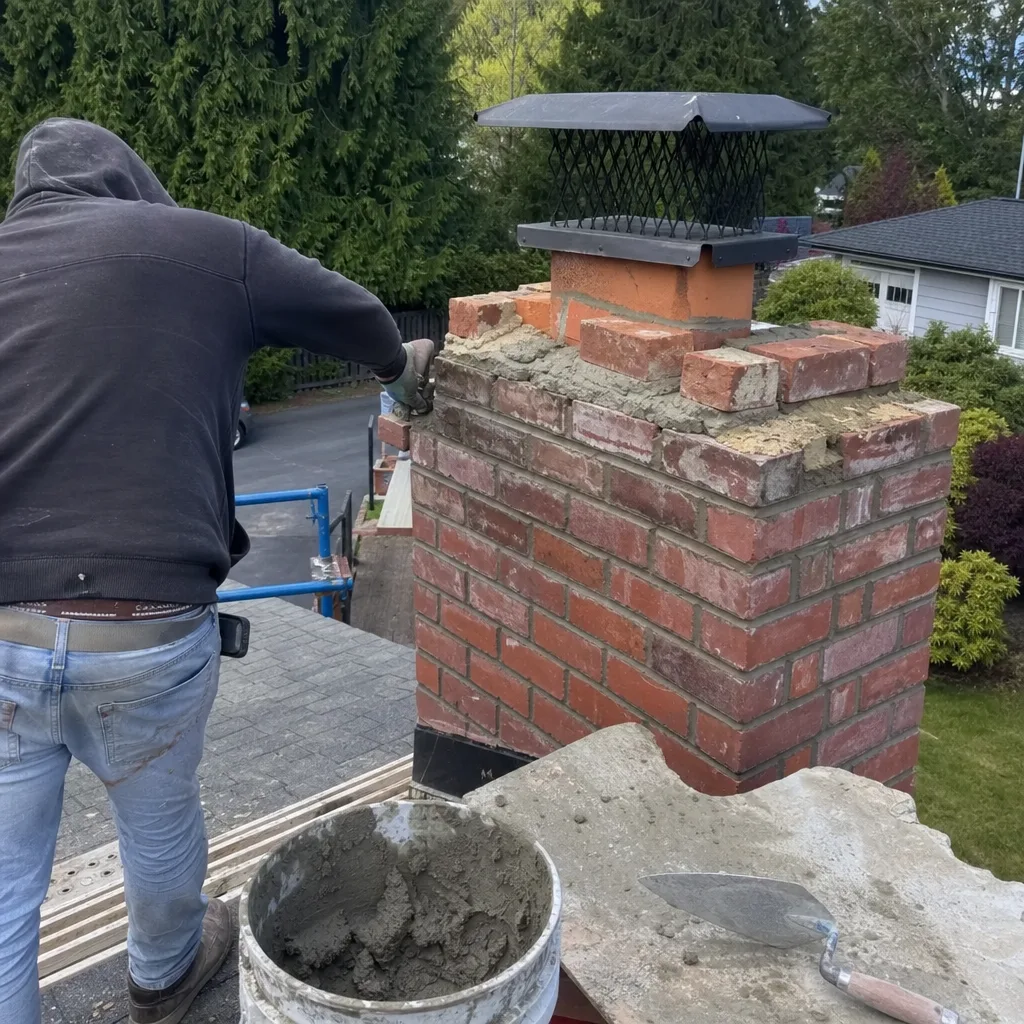
Most Bellevue homeowners book chimney cleaning as seasonal maintenance, something to check off before the first fire of autumn. For more guides & resources on protecting your home through every season, explore our blog. That’s a reasonable impulse, but it understates the service’s real function. A complete cleaning with Level 2 inspection produces documentation that directly affects insurance coverage, claims processing, and property transfer.
Here’s how that plays out in practice:
- Homeowner’s insurance requirements. Many policies require “regular maintenance” for chimney-related coverage. After a fire, the insurer will request documentation of what maintenance was performed, when, and by whom. A dated photo record from a qualified professional satisfies this. A handwritten receipt for “sweep” does not.
- Claims dispute protection. If a chimney fire occurs and the insurer alleges homeowner negligence, the pre-cleaning camera record establishes the liner condition before the event. We’ve provided this documentation for Bellevue homeowners whose insurers initially denied claims based on alleged failure to maintain the system.
- Property sale requirements. Washington State purchase agreements typically include a home inspection contingency. Chimney deficiencies are among the most common inspection flags in Bellevue’s older housing stock. A recent Level 2 inspection report with photo documentation allows the seller to disclose condition accurately or address problems before listing.
- Manufacturer warranty preservation. Factory-built fireplace warranties and stainless steel liner warranties require annual inspection by a qualified technician. The inspection must include examination of the full flue interior. Camera documentation is the standard proof that this examination occurred.
- Landlord-tenant compliance. Rental properties in Bellevue with solid-fuel heating appliances must be maintained in safe condition under Washington landlord-tenant law. Documented annual inspection provides the landlord’s record of compliance.
The key point: cleaning without documentation is maintenance without proof. And in any dispute with an insurer, buyer, or tenant, proof is what matters. Chimney Cleaning & Sweep in Bellevue should always produce a record you can file and retrieve.
How Bellevue’s Climate Affects What Your Chimney Needs
Bellevue’s climate is not extreme, but it is persistently wet. Annual rainfall of approximately 39 inches, combined with moderate temperatures that rarely freeze hard for extended periods, creates specific masonry deterioration patterns that affect chimney cleaning and repair planning.
Moisture-driven spalling. Brick and mortar absorb rainfall through capillary action. In Bellevue’s frequent light rain and high humidity, this moisture rarely fully dries before the next weather event. Over years, the freeze-thaw cycle, even with modest temperature drops, causes surface spalling, flaking, and mortar joint erosion. During cleaning, we inspect for spalling that has exposed the interior chimney structure, a condition that accelerates if not addressed.
Crown wash failure. The concrete crown at the chimney top is the primary water barrier. In Bellevue’s climate, crown wash typically deteriorates in 10-15 years as water penetrates micro-cracks and expands them. A failed crown allows water directly into the flue, where it mixes with creosote to form acidic compounds that corrode metal liners and degrade clay tile. We evaluate crown condition during every cleaning and document findings with photos.
Flashing separation. The metal flashing where the chimney penetrates the roof expands and contracts with temperature changes. In Bellevue’s moderate but variable climate, this movement gradually loosens sealants and fasteners. Water intrusion at the flashing often travels down the chimney exterior, appearing as interior wall stains that homeowners mistake for roof leaks.
Vegetation and animal intrusion. Bellevue’s tree canopy and greenbelt corridors support active wildlife populations. Squirrels, raccoons, and various bird species commonly enter uncapped chimneys. We’ve removed nests from chimneys in the Lake Hills and Woodridge neighborhoods where mature trees overhang roofs. The camera inspection identifies nesting material, droppings, or structural damage from animal entry.
Wind-driven rain entry. Bellevue’s position between Puget Sound and Lake Washington creates localized wind patterns that drive rain horizontally into chimney openings. A standard rain cap may be insufficient; some installations benefit from wind-directional caps or extended shrouds. We assess cap adequacy during exterior evaluation and can specify appropriate replacements using materials from Gelco or Famco, sourced through our Haven buying network.
Choosing a Chimney Cleaning Provider in Bellevue
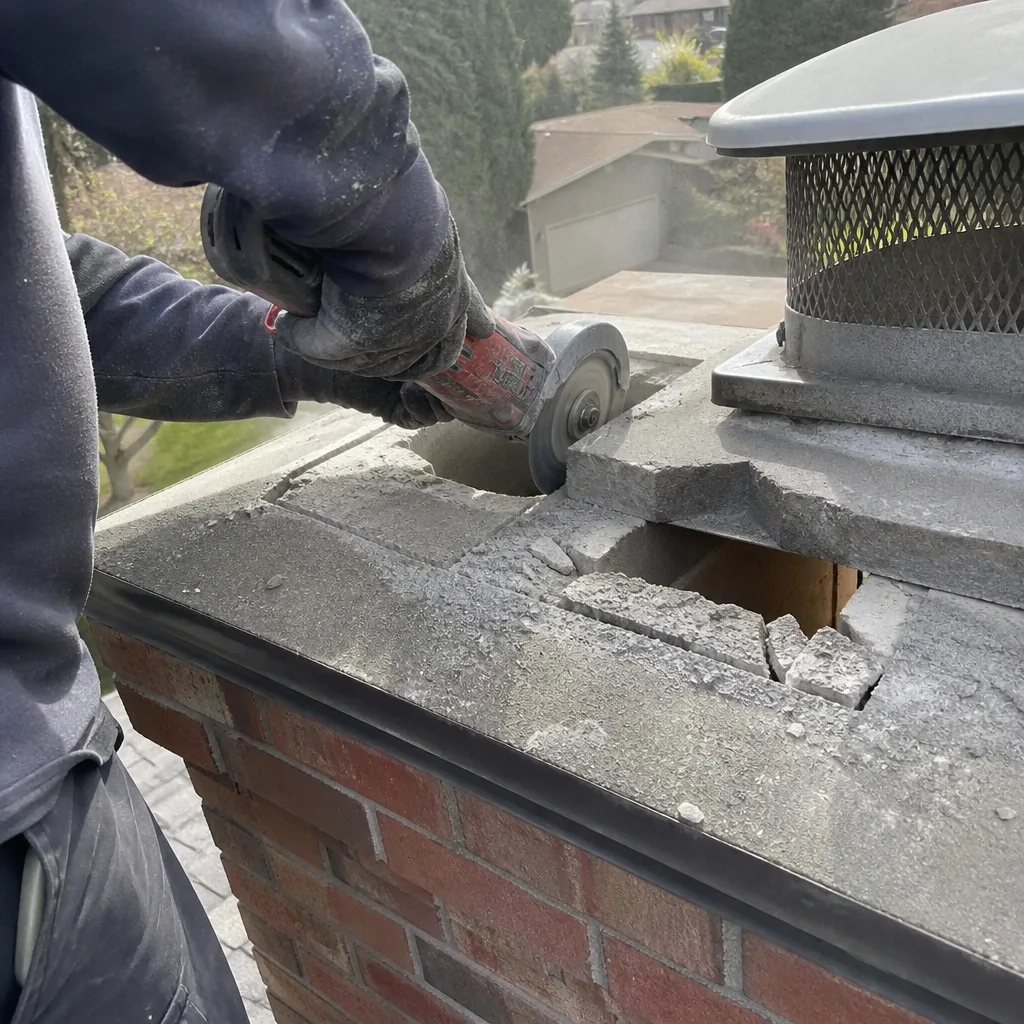
The Bellevue market includes national sweep franchises, independent operators, general handymen who “do chimneys,” and a smaller number of companies that specialize in documented inspection and repair. Choosing between them starts with understanding the DIY vs professional chimney cleaning decision every Bellevue homeowner faces.
Verify the inspection standard. Ask specifically whether the service includes NFPA 211 Level 2 inspection with camera documentation. If the provider doesn’t recognize the term or describes a “visual inspection,” you’re not receiving the complete service that manufacturer warranties and insurance requirements specify.
Request sample documentation. A legitimate provider can show you a redacted example of their completion report. Look for dated photos, narrative findings, and specific material identification. Generic checklists or no documentation at all are warning signs.
Confirm pricing structure. The written price before work starts is Haven Standard Clause 1 for good reason. Avoid providers who quote a low base rate and then discover “additional problems” after work begins. At Level Two Chimney Bellevue, we classify creosote and note visible liner conditions during the camera inspection, then provide a complete written quote before any cleaning or repair proceeds.
Check technician credentials. Background-checked, uniformed technicians with license information displayed are the minimum standard. Ask whether the same technician performs the inspection and cleaning, or whether work is subcontracted to uncredentialed crews.
Evaluate material sourcing. For any recommended repairs, ask where materials are sourced. We procure through Haven’s buying network from established manufacturers including HeatShield, Olympia Chimney, and Copperfield, with specifications that keep customer prices honest. Unbranded or unidentifiable materials are difficult to warranty and impossible to verify for code compliance.
Assess communication preferences. Many Bellevue homeowners in our target demographic prefer text updates to phone calls. We provide technician assignment notifications, arrival estimates, and completion summaries by text. Live phone support remains available 24/7 for scheduling and urgent questions, but routine communication follows customer preference.
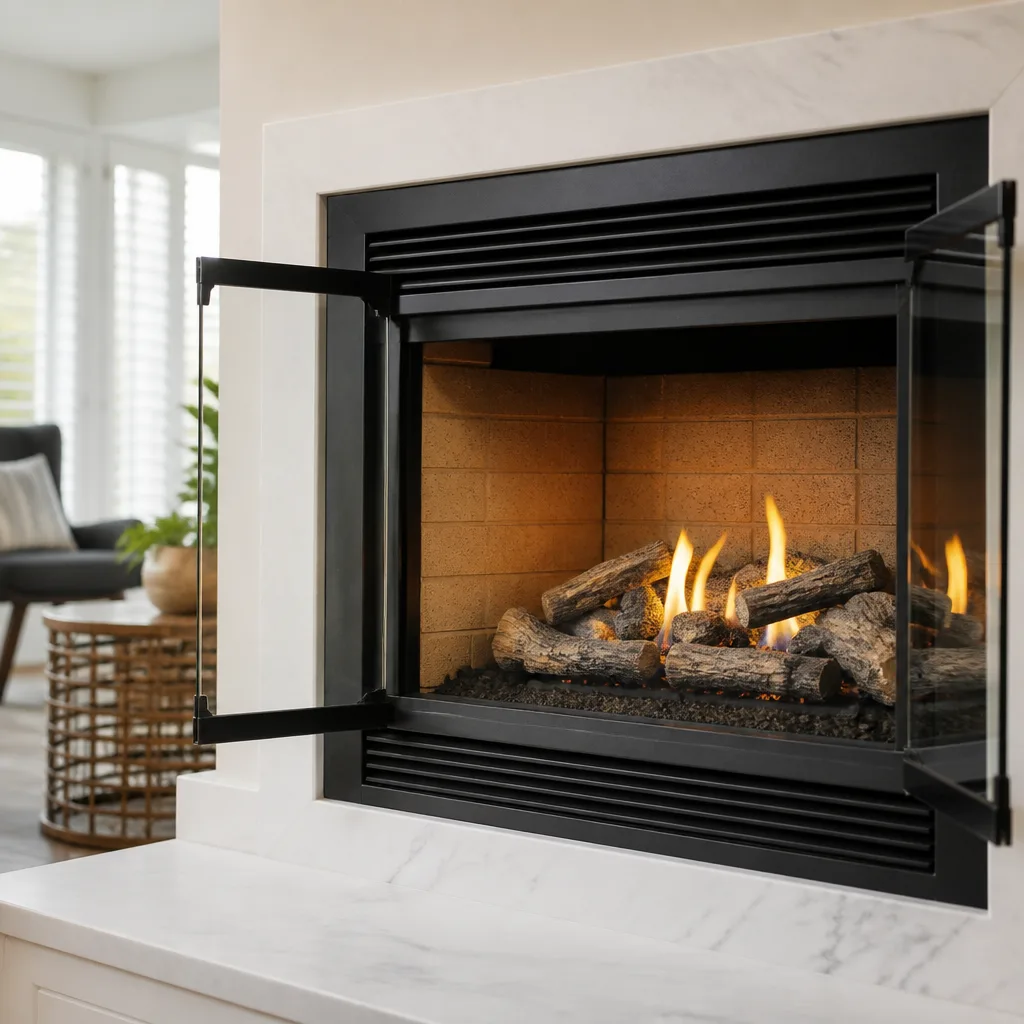
For Fireplace Services in Bellevue that include gas insert maintenance, pellet stove cleaning, or wood-burning system conversion, the same documentation standards apply. Gas systems require different inspection protocols but equally specific completion records.
Common Mistakes to Avoid
- Booking by price alone. The $89-$149 sweep in Bellevue typically excludes camera inspection, produces no documentation, and may be performed by technicians without proper equipment. The savings evaporate when insurance denies a claim or a sale falls through due to undiscovered liner damage.
- Assuming “sweep” equals “inspection.” These are distinct services under NFPA 211. A sweep removes deposits. An inspection evaluates system condition. One does not substitute for the other, and both are necessary annually.
- Ignoring creosote classification. If your provider doesn’t specify Stage 1, 2, or 3, you don’t know what was actually in your flue or whether the removal method was appropriate. This matters for fire risk assessment and for determining whether more frequent cleaning is needed.
- Skipping the exterior evaluation. Bellevue’s wet climate means crown, cap, and flashing conditions directly affect flue deterioration. A cleaning that ignores the exterior misses the cause of interior problems.
- Failing to file documentation. The photo record and written report are only useful if you can produce them when needed. Store digital copies with your home maintenance records and provide them to your insurer if requested.
- Waiting for visible problems. By the time you see interior wall staining, smell smoke in the house, or notice exterior masonry damage, the underlying condition has progressed significantly. Annual inspection catches deterioration at earlier, less expensive stages.
- Using unseasoned wood and skipping cleaning. Burning wet or green wood accelerates creosote formation dramatically. Some Bellevue homeowners with wood lots burn their own unseasoned fuel and compound the problem by extending cleaning intervals. Stage 3 creosote in two years is common under this pattern.
When to Call a Professional
Schedule a professional chimney cleaning and inspection if it’s been more than 12 months since your last service, if you’ve recently purchased your Bellevue home, if you notice any smoke spillage into the room during fires, or if you see exterior masonry deterioration, interior wall staining near the chimney, or debris falling into the firebox. After any chimney fire, seismic event, or significant windstorm, Level 2 inspection is specifically warranted under NFPA 211.
Level Two Chimney Bellevue offers free estimates in Bellevue. Call (425) 696-0387 to schedule a Level 2 inspection with camera documentation, or bring us any competitor’s written quote for a free second opinion under the Haven Standard.
Frequently Asked Questions
A standard chimney cleaning with NFPA 211 Level 2 camera inspection in Bellevue typically costs between $249 and $389, depending on creosote stage, flue accessibility, and whether the chimney serves a fireplace, wood stove, or insert. Stage 3 creosote removal, chemical treatment, or liner repairs are quoted separately in writing after camera inspection. Call (425) 696-0387 for an exact quote on your system - estimates are free.
The NFPA recommends annual inspection for all chimney systems, with cleaning frequency determined by creosote accumulation rather than calendar time. In Bellevue, where many homeowners burn fires intermittently for ambiance rather than heat, annual inspection often shows Stage 1 deposits manageable with standard cleaning. Heavy use of unseasoned wood or daily winter burning may require more frequent service. The camera inspection reveals your actual accumulation rate.
You need a new liner only if camera inspection reveals conditions that compromise safety: cracked clay tile with gaps exposing combustibles, separated joints allowing flue gas escape, or corrosion in metal liners exceeding manufacturer tolerances. We show you the camera footage and explain the specific defect before recommending replacement. Some conditions can be repaired with HeatShield cerfractory foam or stainless steel relining; others require full replacement. Nothing is recommended without camera evidence you can see yourself, and we specify when work can safely wait versus when it should proceed before next use.
Skipped cleaning allows creosote accumulation to progress through stages, increasing fire risk and potentially obstructing the flue. Stage 3 creosote ignites at lower temperatures and burns intensely. Accumulation can also reduce draft, causing smoke spillage and carbon monoxide exposure. In Bellevue’s wet climate, uncleaned flues allow acidic condensation from creosote and moisture to accelerate liner deterioration. Insurance claims after chimney fires are frequently denied when no maintenance documentation exists.
A sweep removes combustible deposits from the flue, smoke chamber, and firebox. An inspection evaluates structural condition, liner integrity, and system safety. NFPA 211 defines three inspection levels; Level 2 includes camera examination of the full flue interior and is required for property transfers, after fires, and when alterations occur. A complete service includes both sweep and Level 2 inspection. Either alone is incomplete.
Homeowners can purchase brushes and attempt basic flue cleaning, but this carries significant limitations and risks. Without camera equipment, you cannot inspect the full liner length for cracks, gaps, or deterioration that brushing could worsen. Roof access for top-down cleaning involves fall hazard on pitched surfaces. Most importantly, DIY cleaning produces no documentation for insurance, warranty, or property sale purposes. For systems with any Stage 2 or 3 creosote, or any suspected liner damage, we recommend professional service. The 365-Day Done Right Promise on our work provides recourse that DIY cannot.
The Bottom Line
A chimney cleaning in Bellevue is only as valuable as the documentation it produces. The complete service includes NFPA 211 Level 2 camera inspection before brushes enter the flue, creosote classification and appropriate mechanical removal, smoke chamber and firebox cleaning, exterior evaluation, and a written completion report with dated photo record. Most homeowners pay $249-$389 for this standard service. Anything less skips essential steps; anything more without written justification should be questioned. In a climate where moisture accelerates masonry deterioration and insurance documentation increasingly matters, the camera inspection and written record are not extras. They’re the point of the service.
Level Two Chimney Bellevue has completed more than 38,000 chimney inspections and cleanings since 2009, every one with a written price before work started and a documented record when finished. The 365-Day Done Right Promise, Haven Standard Clause 4 photo documentation, and free second opinions on any written estimate are standard on every job. Materials from DuraFlex, HeatShield, Gelco, Olympia Chimney, Famco, and Copperfield are sourced through Haven’s buying network to keep pricing honest.
Call (425) 696-0387 for a free estimate on chimney cleaning in Bellevue. Written price, written scope, written warranty - before any work begins.
Written by Corrine Halstead, Owner at Level Two Chimney Bellevue, serving Bellevue since 2009.