
Level 1 sweep and inspection to the NFPA 211 annual standard - flue, crown, cap, and flashing checked and photographed
Chimney sweep logs do not sweep chimneys. They loosen some creosote - which then falls where a brush and vacuum still have to collect it.
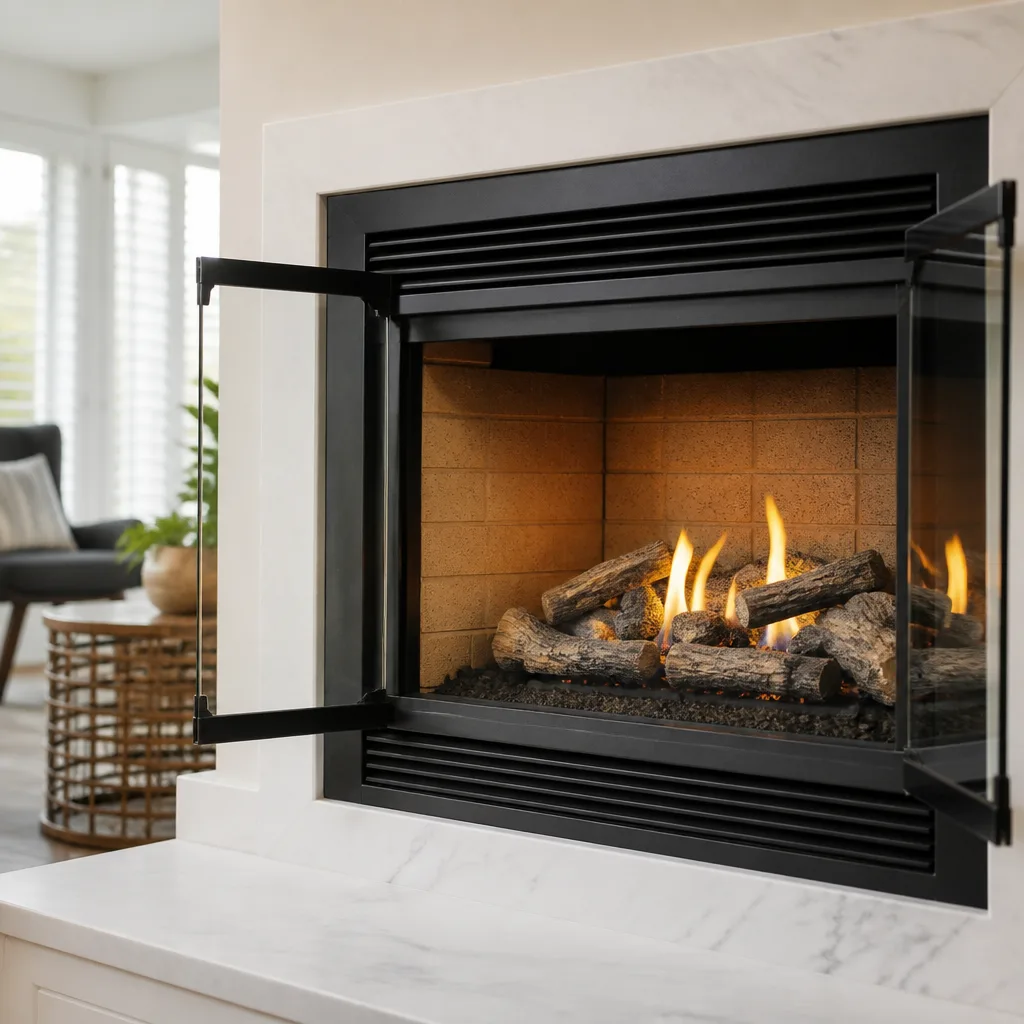
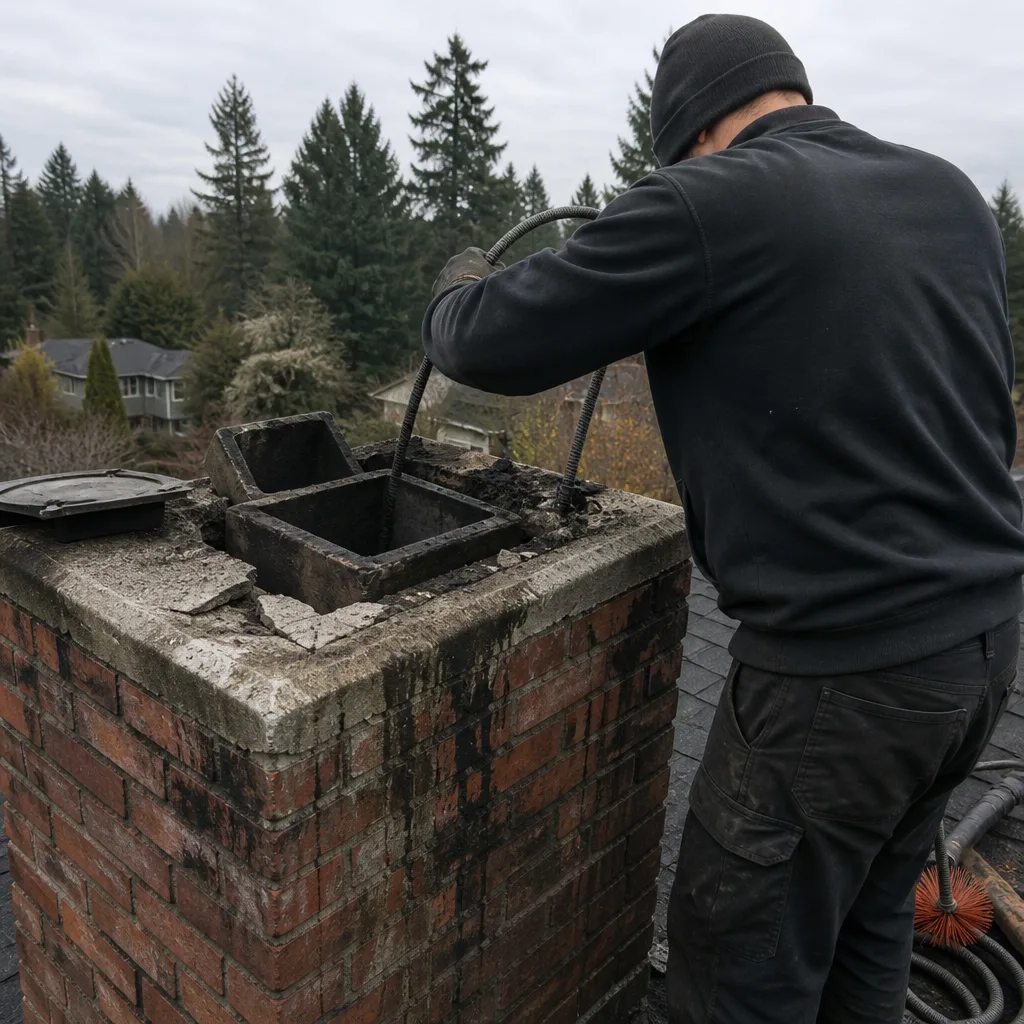 Before
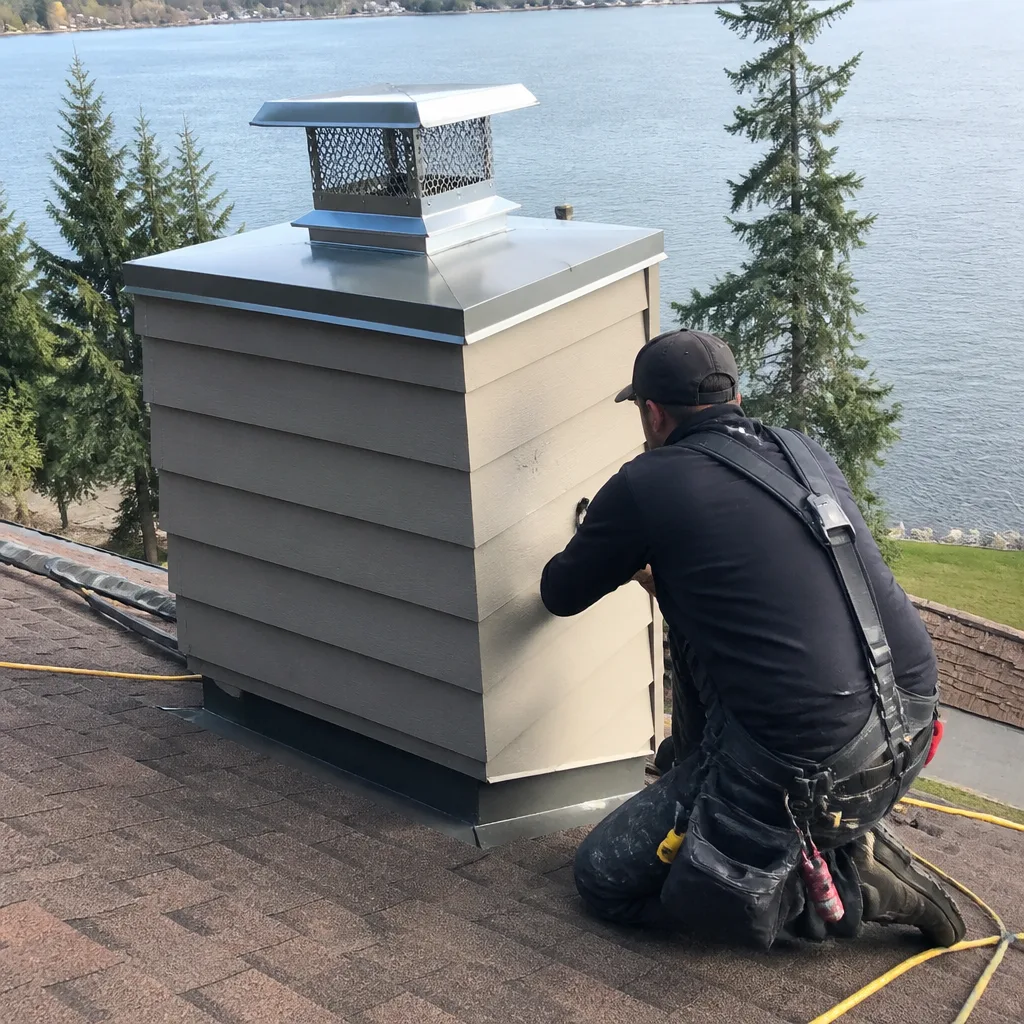 After
After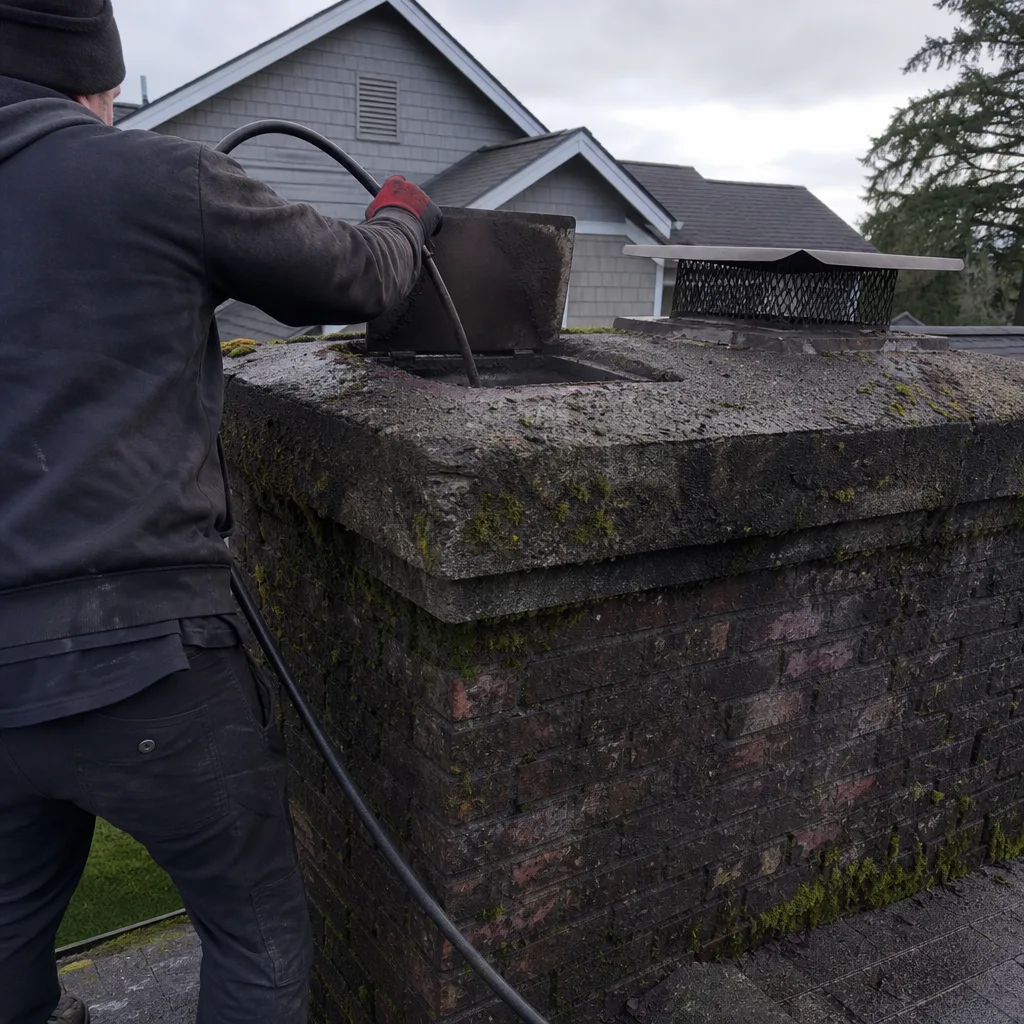 Before
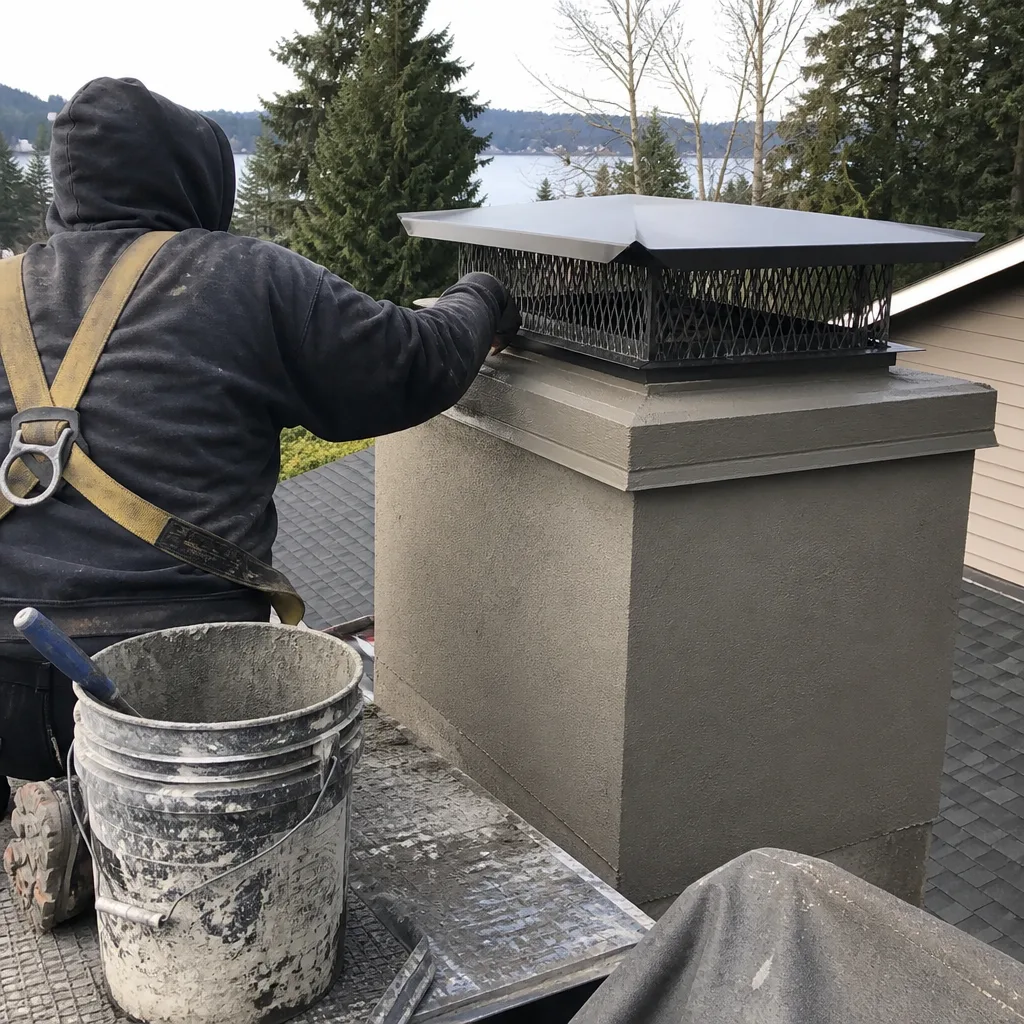 After
After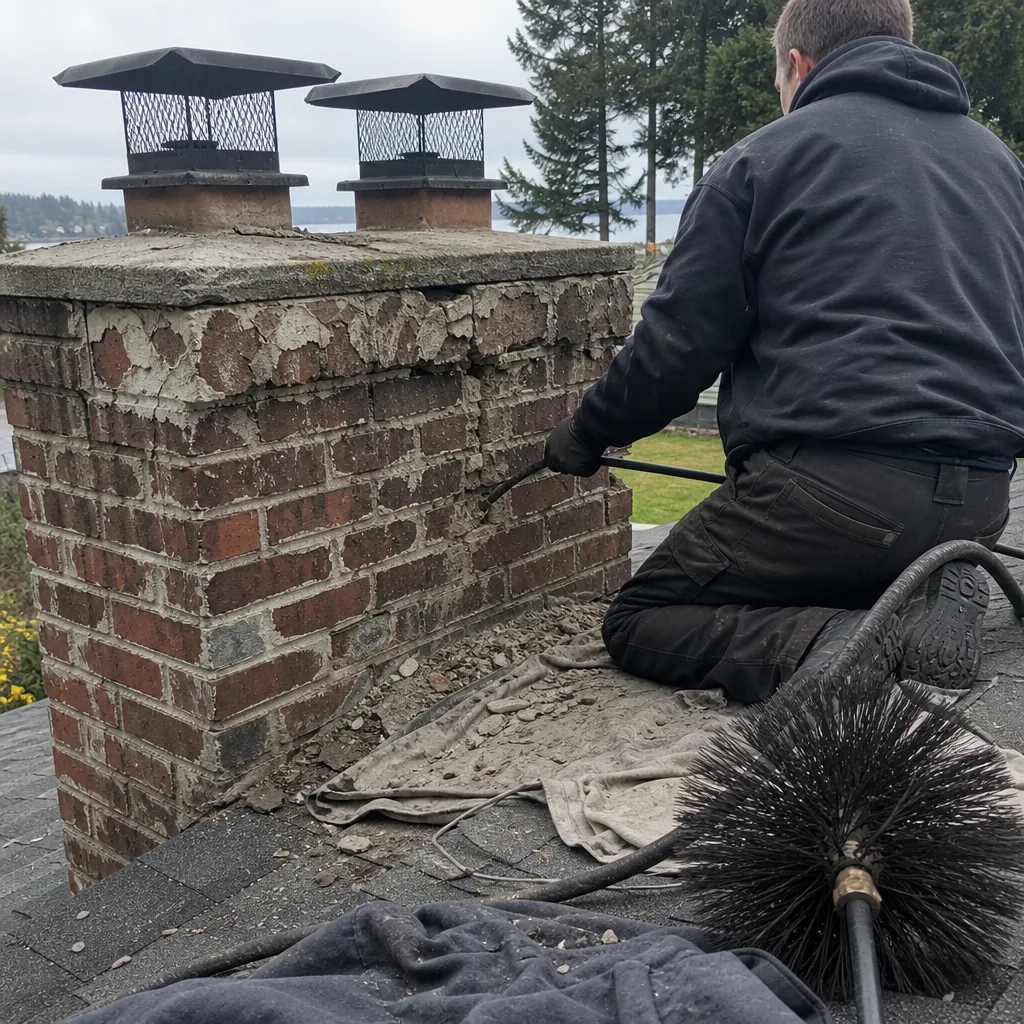 Before
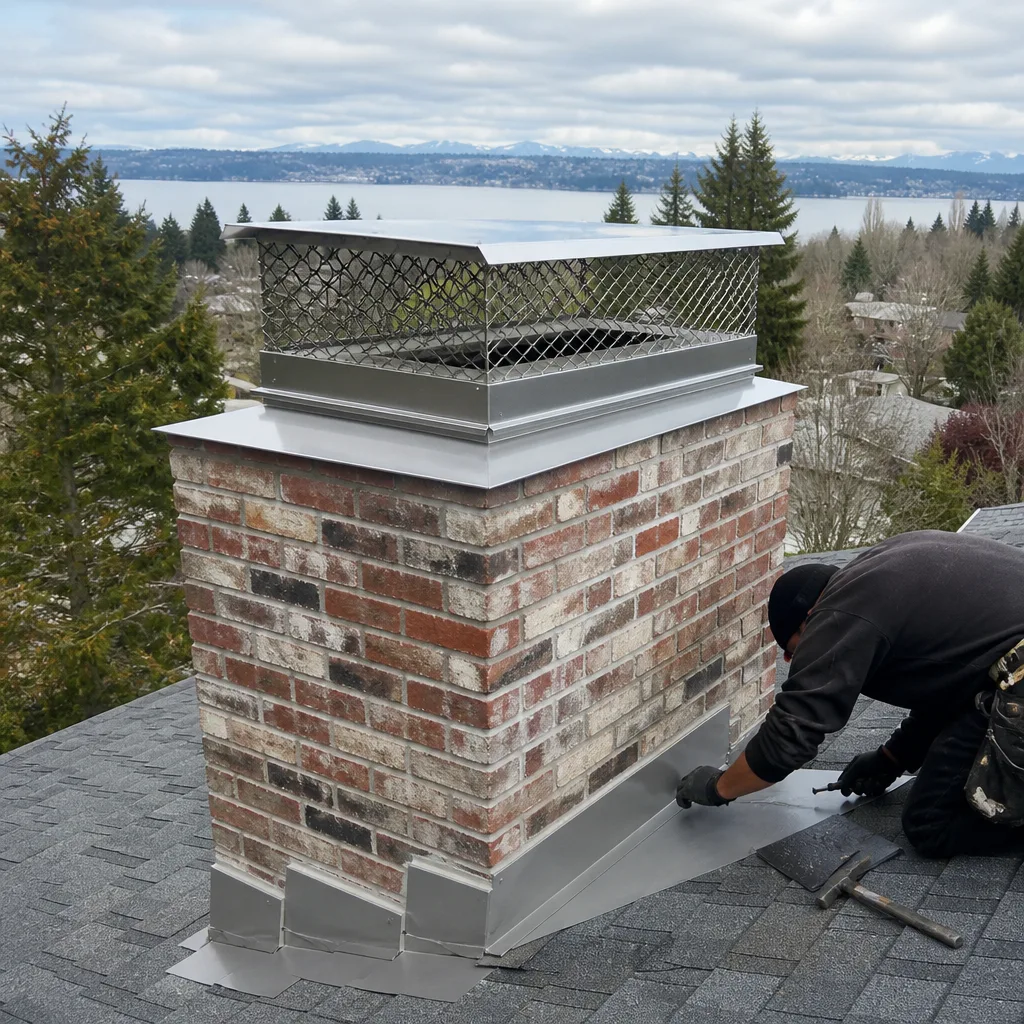 After
AfterCreosote Removal in Bellevue, WA
Creosote removal in Bellevue typically costs between $250 and $650, depending on how much has built up and which class of deposit we’re dealing with. Most jobs are completed in a single visit, and every one starts with a Level 1 Inspection and camera scan so we know exactly what we’re removing before we quote a price. If you want a number before anyone touches your chimney, call (425) 696-0387 – that’s how every job at Level Two Chimney Bellevue works.
Creosote is the combustion byproduct that accumulates inside your flue liner every time you burn wood. In Bellevue’s climate – wet winters, frequent low-burn fires to take the chill off, and a lot of softwood from the surrounding forests – it builds faster than most homeowners expect. We see it constantly in homes across Bellevue’s east-side neighborhoods: Factoria, Somerset, Lakemont, Bridle Trails, and the older split-levels along Cougar Mountain’s western edge. A single cord of wet alder burned through a cold January can leave a flue that looked clean in October looking like a tar pipe by February.
Level Two Chimney Bellevue has been documenting this specific problem since 2009. Our work falls under Chimney Cleaning & Sweep in Bellevue, but creosote removal – especially Class II and Class III deposits – is a distinct process that requires more than a standard brush run. We’ll show you what’s there with the camera before we start, give you a written price, and leave you with a photo record when we’re done. No surprises during the job. No bill that looks different from what we quoted.
When You Need Creosote Removal
Standard Chimney Cleaning & Sweep services handle light, first-degree creosote – the dry, flaky kind that brushes out easily. The following situations call for dedicated creosote removal rather than a routine sweep:
- You smell something acrid or oily when the fireplace isn’t in use. That’s typically tar-saturated Class II creosote off-gassing through hairline cracks in the flue liner. In Bellevue’s older Enatai and Newport Hills homes, we find this most often in double-wythe masonry chimneys that haven’t been lined since the 1980s.
- Your last sweep report noted “glazed” or “tar-like” buildup. Glazed creosote – Class III – is hardened, shiny, and chemically bonded to the tile. A wire brush won’t touch it. It requires chemical treatment followed by mechanical removal.
- You’ve had more than one slow-burning, smoldering fire this season. Low-oxygen burns are the primary cause of rapid Class II deposit formation. If your fires run cool and you’re loading green or unseasoned wood, a single winter can produce dangerous accumulation.
- You’re buying a home in Bellevue and the inspection flagged the chimney. Real estate transactions in King County require a clear record. A written creosote removal report and post-clearance photo documentation satisfies most lenders and underwriters.
- Your chimney had a chimney fire – even a small one. Creosote is the fuel source for chimney fires. Even a minor event can leave residual glazed deposits that will ignite again. A camera scan after any chimney fire is non-negotiable under NFPA 211.
- There’s visible dark staining around the firebox opening or damper throat. Staining at the smoke chamber indicates that gases – and the particles they carry – are not drafting cleanly. Creosote is almost always part of the cause in Bellevue homes with the tight, energy-efficient construction that became standard after 2005.
Our Creosote Removal Process
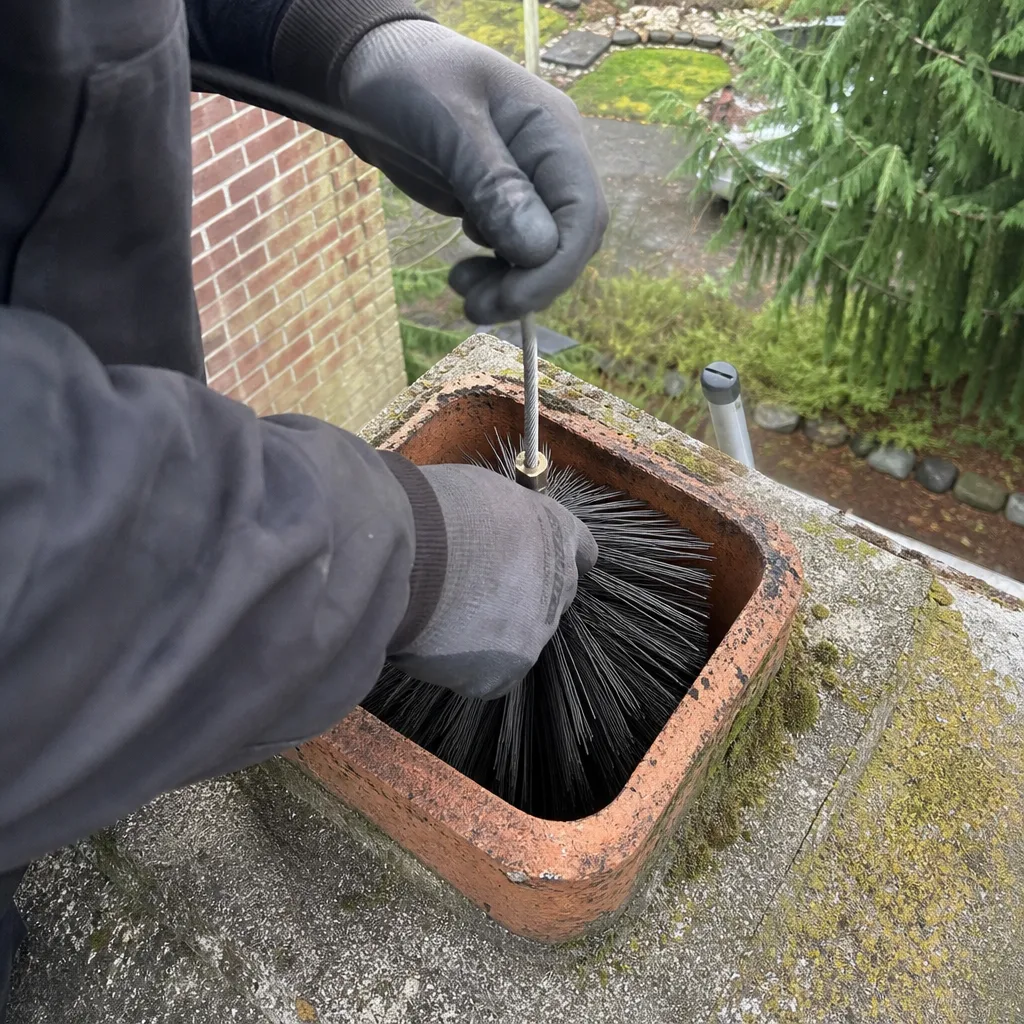
We don’t guess at what’s in your flue. Every creosote removal at Level Two Chimney Bellevue follows a documented sequence – camera first, written price second, work third.
-
Camera-Scan Inspection (NFPA 211 Level 2)
The technician runs a camera down the full length of your flue liner before any brushing or chemical application begins. This tells us the creosote class, the deposit thickness at each section, and whether there are underlying liner cracks or gaps the creosote may be masking. You see the footage. We explain what it means in plain terms. This step is included in every visit – it isn’t an upsell. -
Written Price Delivered Before Work Starts
Based on the camera findings, we write a scope of work, a price, and a warranty statement. You review it. You sign it. Work begins only after that. This is Haven Standard Clause 1 – not a courtesy, a policy. The price on that paper is the price on your invoice. -
Chemical Treatment for Class II and Class III Deposits
For hardened or glazed creosote, we apply a certified chemical treatment agent – typically a product from the Copperfield line of professional sweep chemicals – that breaks down the crystalline structure of the deposit and makes mechanical removal possible. For Class III glazed creosote, this step can require an overnight dwell period. We’ll tell you exactly what that means for your timeline before you agree to anything. -
Mechanical Removal and Rotary Cleaning
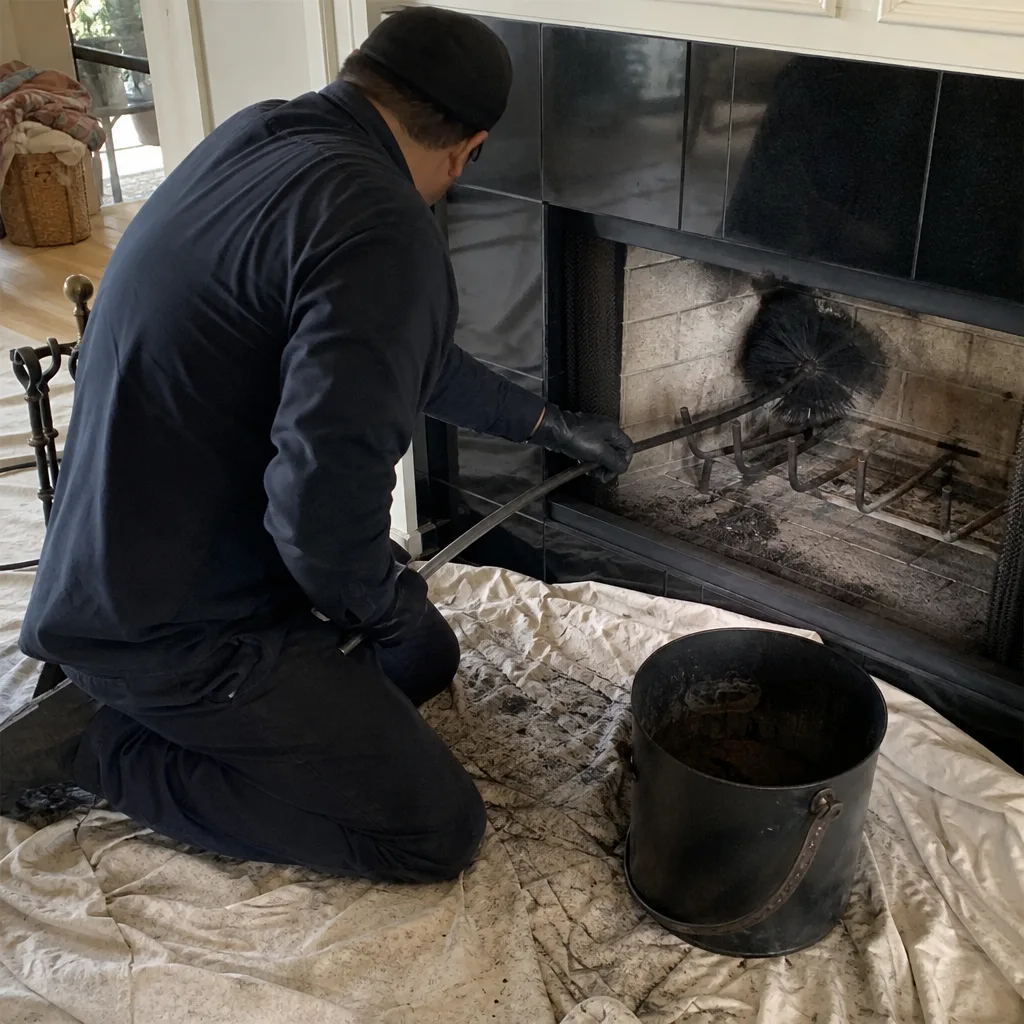
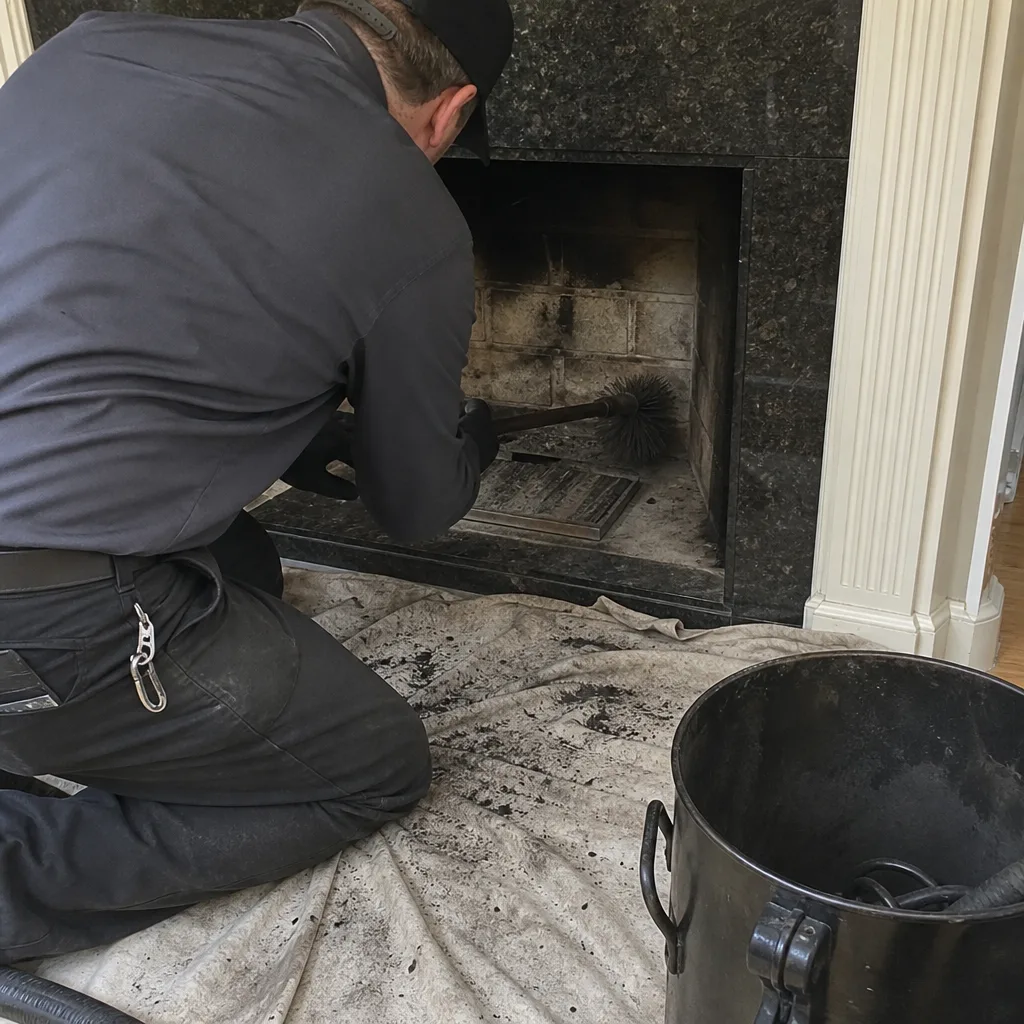
Once the chemical has done its work, our technician runs the appropriate brush system through the flue – rotary power sweeping for heavy deposits, hand rods for sections near liner joints that require more control. All debris is contained and removed from the property. We use drop cloths, sealed work zones at the firebox, and a HEPA-filtered vacuum throughout. Your living room looks the same when we leave as when we arrived. -
Post-Clearance Camera Scan
When the flue is clean, we run the camera again. This isn’t a formality – it’s how we confirm clearance and catch anything the initial scan may have underestimated once the deposits are gone. If the liner is damaged, we document it, show you the footage, and give you a written repair option. We don’t schedule a second appointment to tell you something we found on the first one. -
Documented Photo Record Delivered to You
Every job closes with a written report: before and after photos, camera footage summary, the creosote class found, the removal method used, and confirmation of clearance. This is Haven Standard Clause 4 – documented since 2009, included on every job. It’s the record your insurer, your real estate agent, or your home-sale disclosure may eventually ask for.
 Before
 After
AfterCreosote Removal Pricing in Bellevue
Creosote removal in Bellevue runs between $250 and $650 for the majority of residential jobs. Here’s what drives that range:
| Creosote Class | Description | Typical Price Range |
|---|---|---|
| Class I | Dry, flaky deposit – standard brush removal | $250 – $320 |
| Class II | Tar-like, sticky deposit – brush plus chemical treatment | $320 – $480 |
| Class III | Glazed, hardened, crystalline – chemical dwell plus rotary mechanical removal | $480 – $650 |
| Class III (severe/multi-section) | Heavy glaze across multiple flue sections, may require two visits | $650 – $950+ |
These ranges reflect what we actually charge in Bellevue – not a national average pulled from a trade publication. Bellevue’s housing mix matters here: the two-story colonials in Crossroads, the tall masonry chimneys in Somerset, the prefab zero-clearance units in newer construction around Lake Hills that may need Fireplace Cleaning all have different flue heights and liner configurations that affect labor time. A one-story ranch with a 12-foot masonry flue costs less to clean than a three-story Tudor with a 28-foot liner that hasn’t been touched in a decade.
The camera-scan inspection that opens every job is included in those prices. So is the photo record at the end. So is the written warranty. The number we give you before we start is the number on your invoice. If a second visit is needed – for a severe Class III job requiring an overnight chemical dwell – we tell you that upfront and quote both visits in writing before we begin.
We also offer a free second opinion on any written estimate from a competitor. Bring us the paper, and we’ll review it alongside your camera footage and give you a plain-language comparison.
FAQs – Creosote Removal
How much does creosote removal cost in Bellevue?
Creosote removal in Bellevue costs between $250 and $650 for most residential jobs, with severe Class III glazed deposits running $650 to $950 or more when multiple flue sections are affected. The exact price depends on the creosote class, flue height, and liner configuration – all of which we assess with a camera scan before quoting. Call (425) 696-0387 for a written estimate; we don’t give ballpark numbers over the phone without seeing the flue first.
Is Class III creosote actually dangerous?
Class III creosote – the glazed, shiny, tar-hardened type – is the leading fuel source for chimney fires. It ignites at around 451 degrees Fahrenheit, burns at temperatures that can crack tile flue liners and ignite adjacent framing, and it does not brush out. Standard sweeping does nothing to Class III deposits. In Bellevue homes with older masonry chimneys, we find Class III buildup most often in flues where low, smoldering fires were the norm – wood stoves banked overnight or open fireplaces run with the damper partially closed. A camera scan tells you what class you’re dealing with. Chemical treatment and rotary mechanical removal are the only methods that clear it safely. This is not a DIY task: working inside a flue with chemical treatment agents and rotary equipment at height carries real injury risk, and an improperly cleared flue is a fire hazard. Call a trained technician.
How long does creosote removal take?
Class I removal typically takes 60 to 90 minutes. Class II jobs – with chemical treatment included – usually run 2 to 3 hours. Class III glazed deposits can require a same-day chemical application followed by a return visit 24 hours later for mechanical clearance, making the total job span two days. We tell you exactly which scenario applies before work starts, based on the camera scan. If it’s a two-visit job, both visits are priced in writing at the beginning. No surprises on day two.
Will my homeowner’s insurance cover creosote removal?
Most standard homeowner’s insurance policies in Washington State do not cover routine maintenance – and creosote removal is classified as maintenance. However, if a chimney fire caused by creosote ignition has already occurred, your policy’s fire damage provisions may apply to the resulting structural damage. What insurers increasingly do ask for – especially at renewal or after a claim – is documented proof of chimney maintenance. The photo record and written clearance report we provide under Haven Standard Clause 4 serves that purpose directly. Keep it with your home records. If you’re not sure what your policy covers, your insurer is the right person to ask – but we can give you the documentation they’ll want to see.
What Sets Level Two Chimney Bellevue Apart
Most sweep companies in the Bellevue area arrive with a flashlight, brush the flue, and hand you a receipt. That’s not an inspection. It tells you nothing about the liner condition, the creosote class, or whether what came out represents all of what was there. It’s also not useful documentation for an insurer or a buyer’s agent.
Level Two Chimney Bellevue made camera-scan documentation the default in 2009 – before Washington State regulators asked for it, before insurers started requesting it, before it became Clause 4 of the Haven Standard. Across more than 38,000 chimney inspections and cleanings – including Level 2 Inspection work – since then, the written-price-before-work-starts rule has never had an exception. Not once.
Corrine Halstead leads the operation and has been part of establishing those standards from the beginning. When you schedule a creosote removal in Bellevue with us, you’ll know the technician’s name before they arrive, receive a text when they’re on the way, and walk away with a written record of exactly what was found and what was done.
If you’ve had a competitor’s written estimate and want a second set of eyes on it, bring it in. The second opinion is free, and we’ll show you the camera footage alongside it so you can compare what someone quoted against what’s actually in your flue.
All materials we use for follow-on liner work – if the camera finds damage that needs addressing – come from suppliers including DuraFlex and HeatShield, procured through Haven’s buying network to keep prices honest. You’ll see those line items in writing before anyone orders a thing.
Key Takeaways
- Creosote removal in Bellevue costs $250-$650 for most jobs; Class III glazed deposits can run higher.
- A camera scan happens before every job – it’s how we know what we’re removing and how we price it accurately.
- Written price, written scope, and written warranty are delivered before work begins. Every time.
- The documented photo record you receive at the end is the record your insurer or your buyer’s agent may eventually need.
- Class III creosote requires chemical treatment and mechanical removal – standard brushing does not clear it, and this is not a safe DIY task.
- Bellevue’s wet winters and softwood-heavy fuel mix accelerate creosote formation – annual inspection is the right baseline for most homes here.
- Every job is backed by the 365-Day Done Right Promise: if it’s not right, we make it right.
Schedule Creosote Removal in Bellevue
If you want to know what’s in your flue before fire season, or if a recent inspection report flagged buildup you want addressed before it becomes a larger problem, call (425) 696-0387. A live person answers 24 hours a day, 7 days a week – not a voicemail, not a form. We’ll schedule a camera-scan inspection, give you a written price based on what the camera actually shows, and complete the removal in one visit when the deposit class allows. For an overview of everything our Bellevue team covers, visit our home page, or go directly to the full Chimney Cleaning & Sweep in Bellevue page to see how creosote removal fits into our broader service scope.
Written by Corrine Halstead, Owner at Level Two Chimney Bellevue, serving Bellevue.