
Last updated September 22, 2026
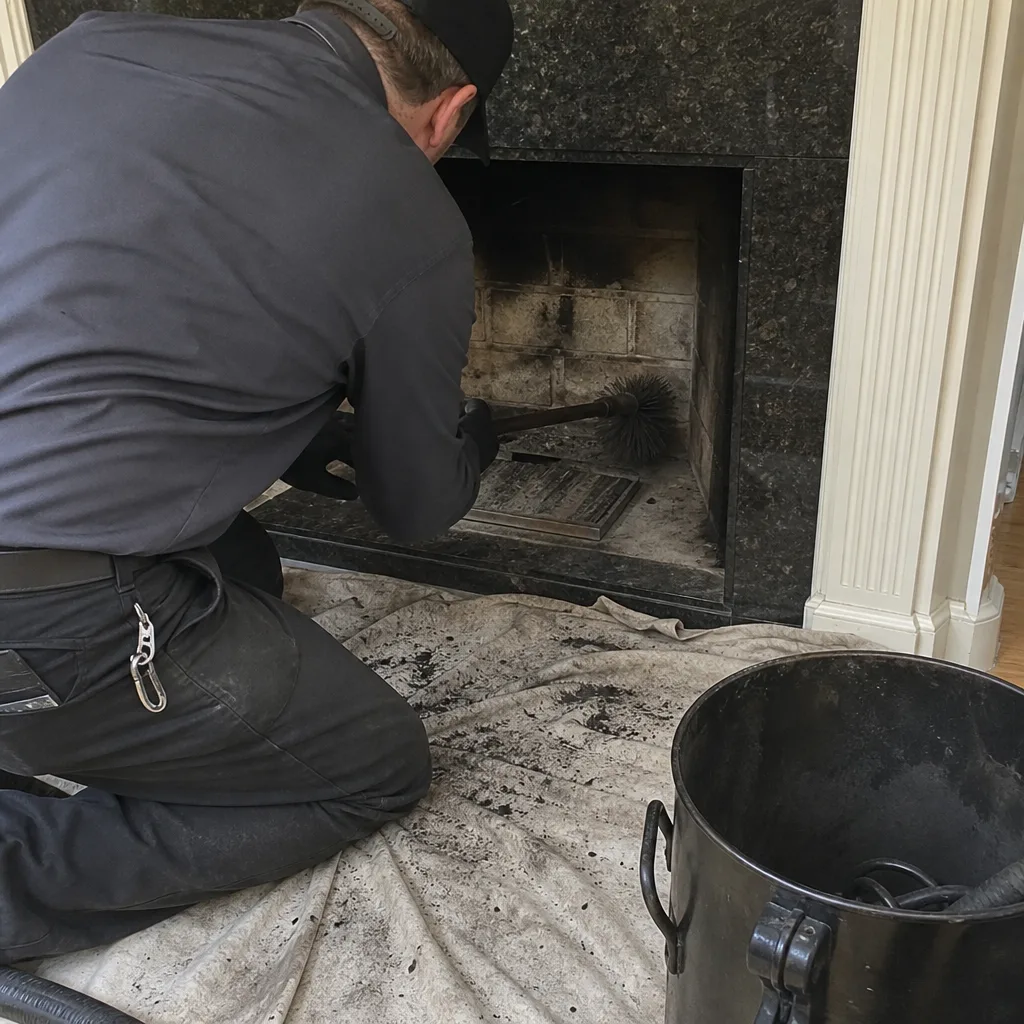
Level 1 sweep and inspection to the NFPA 211 annual standard - flue, crown, cap, and flashing checked and photographed
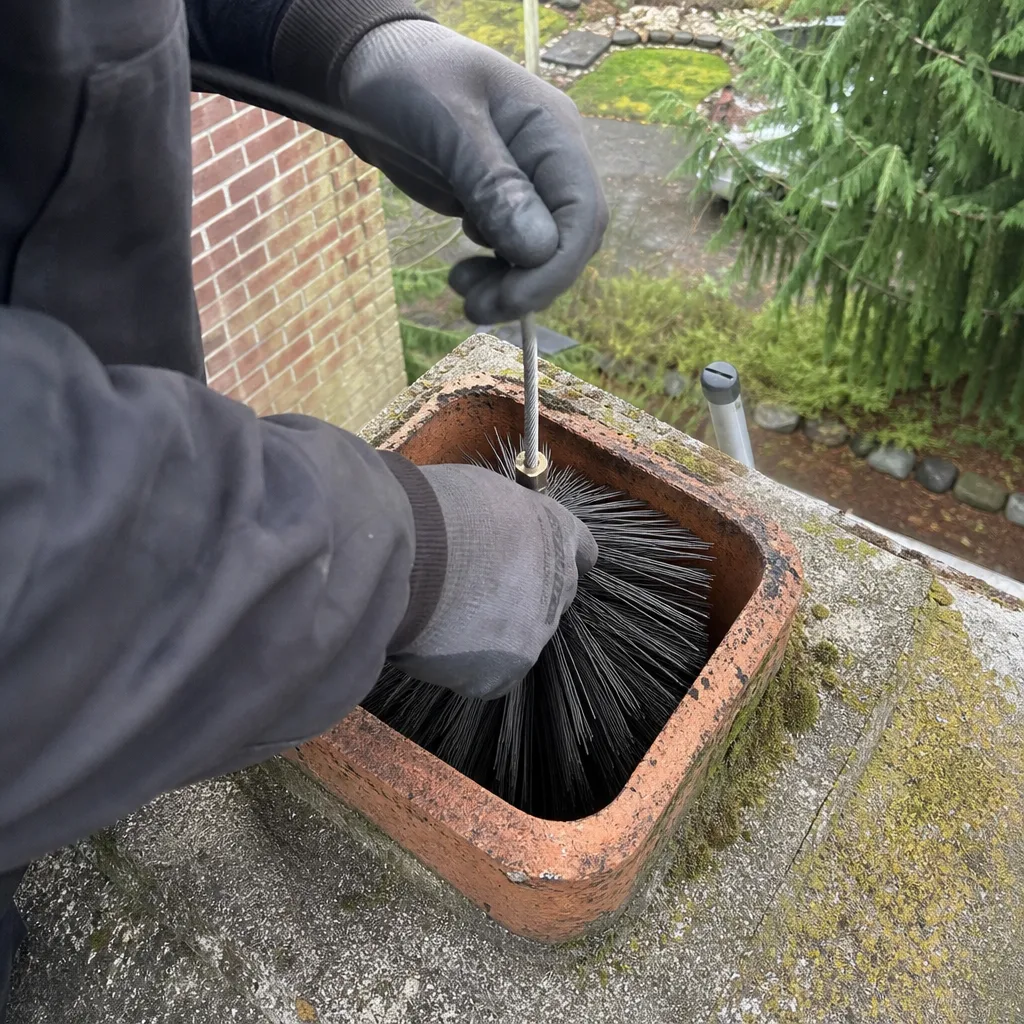
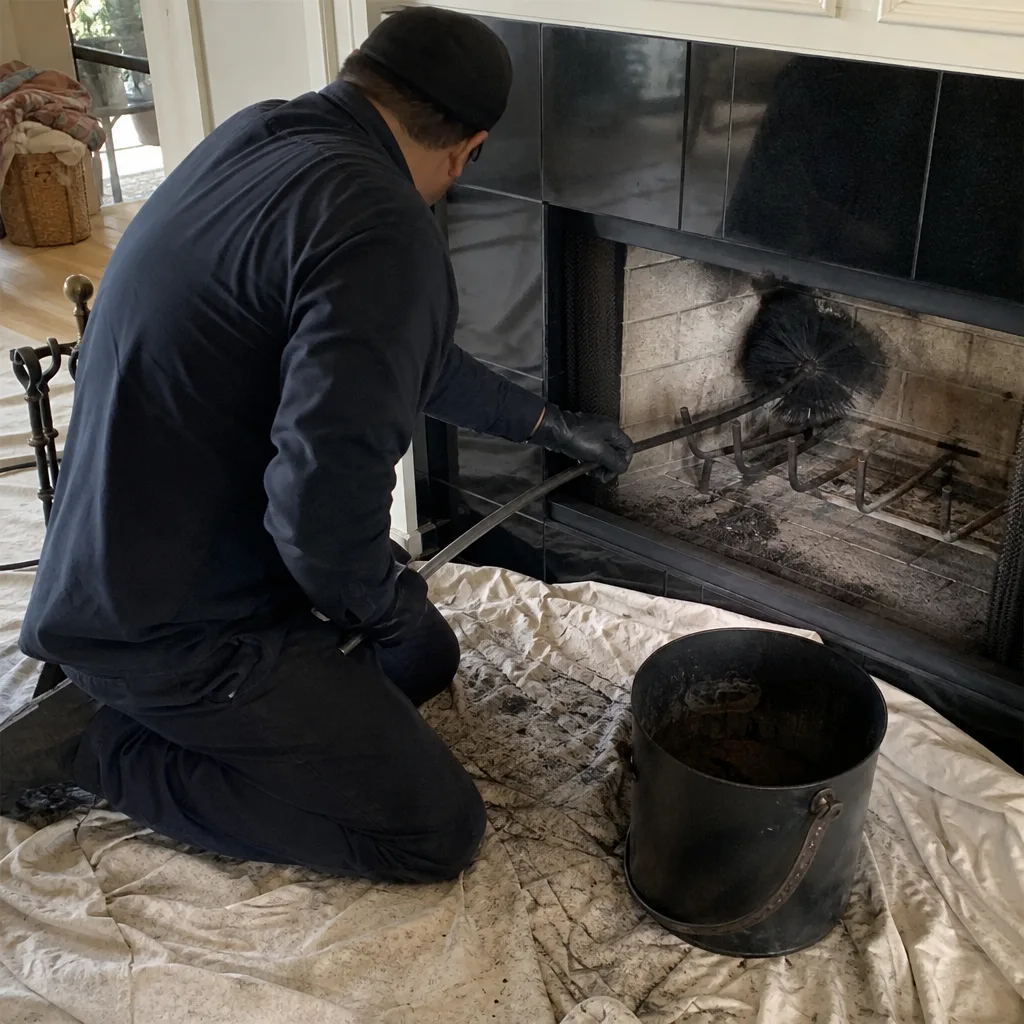
Chimney sweep logs do not sweep chimneys. They loosen some creosote - which then falls where a brush and vacuum still have to collect it.
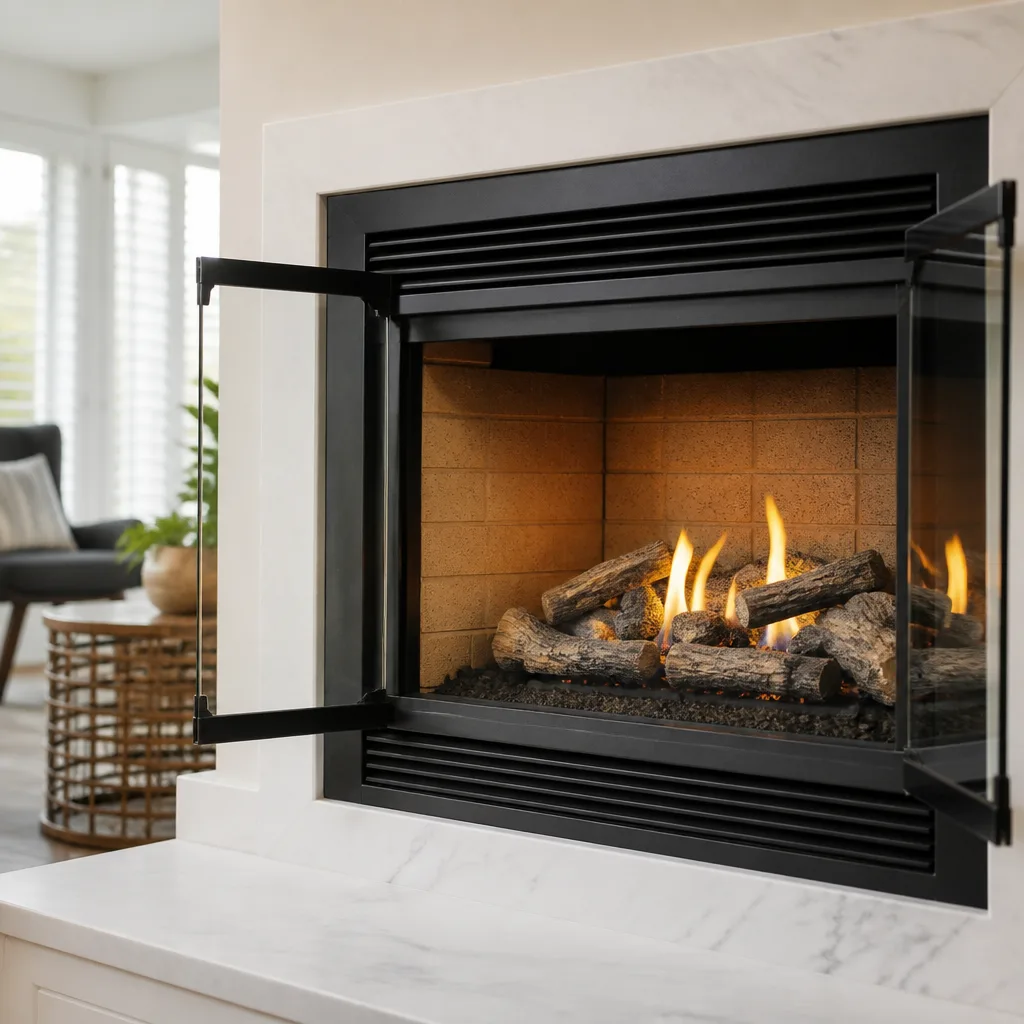
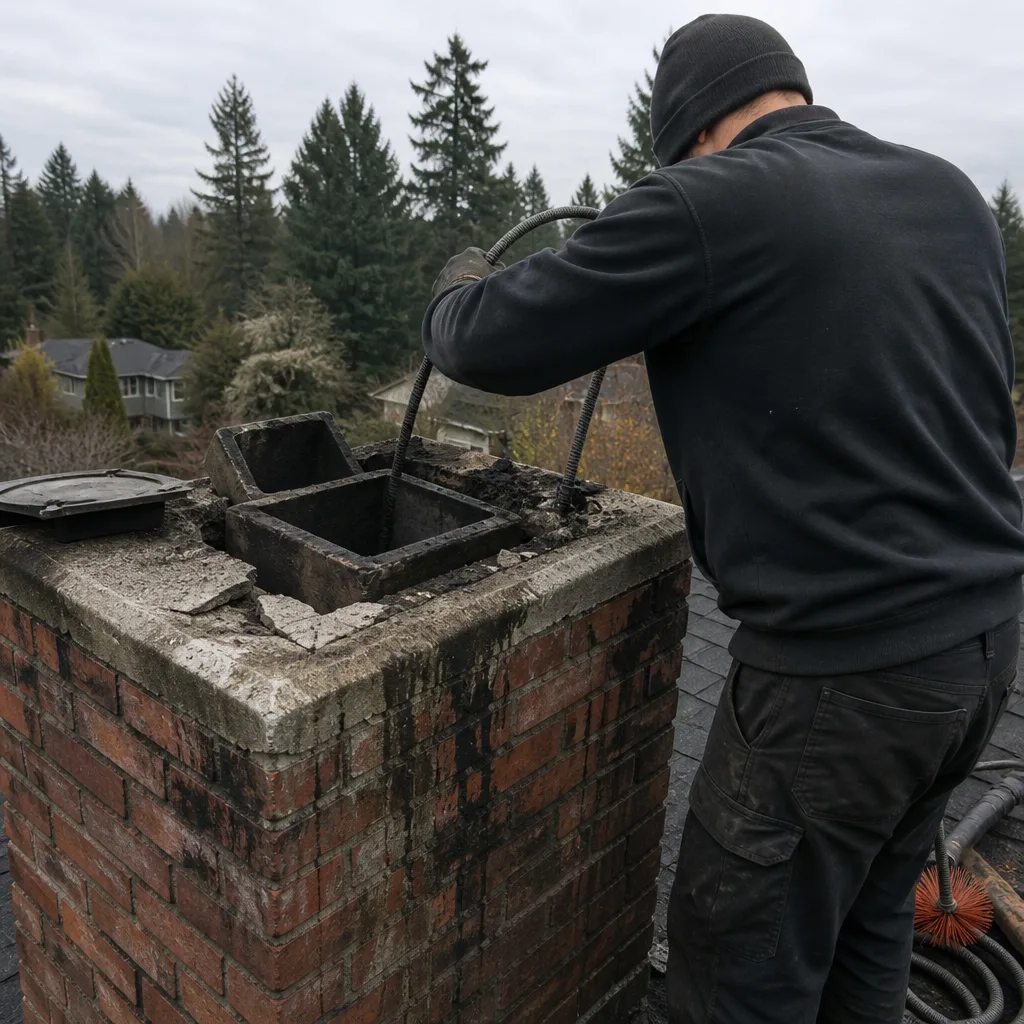 Before
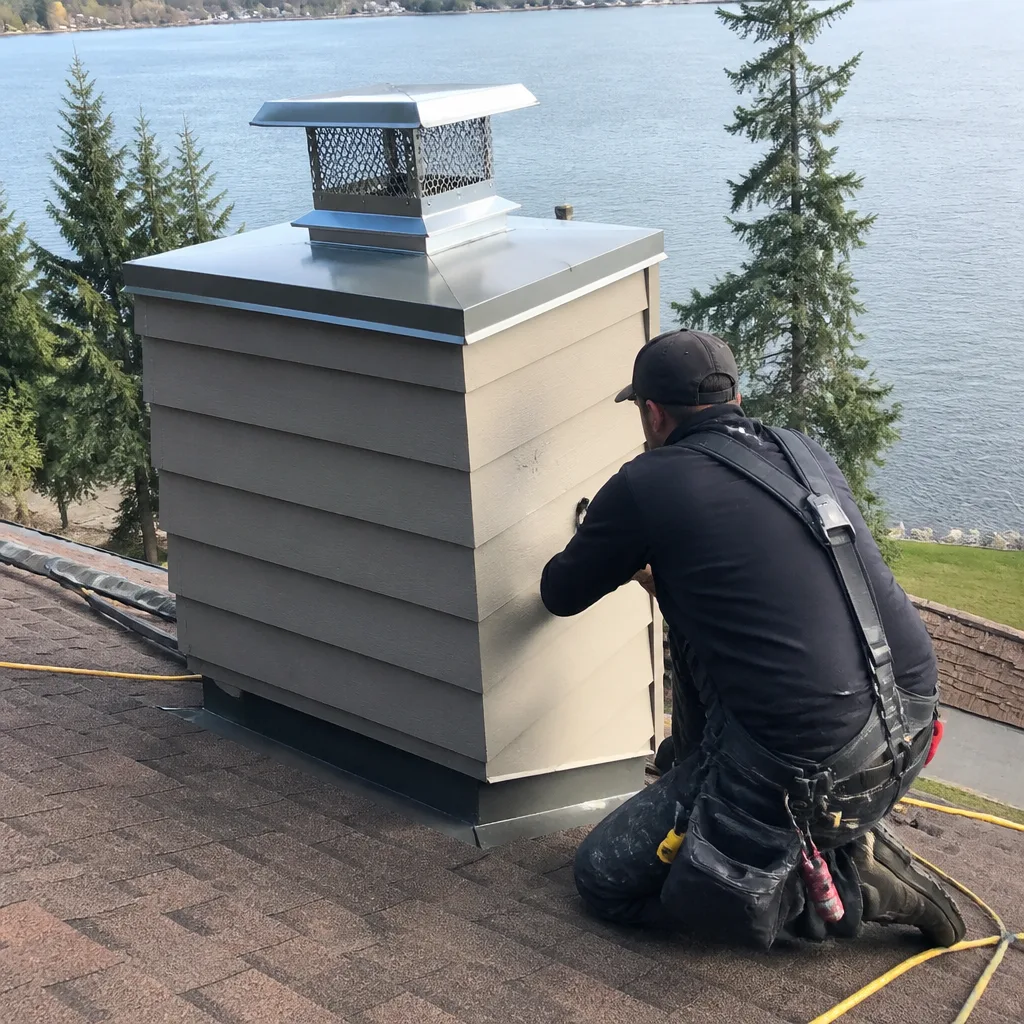 After
After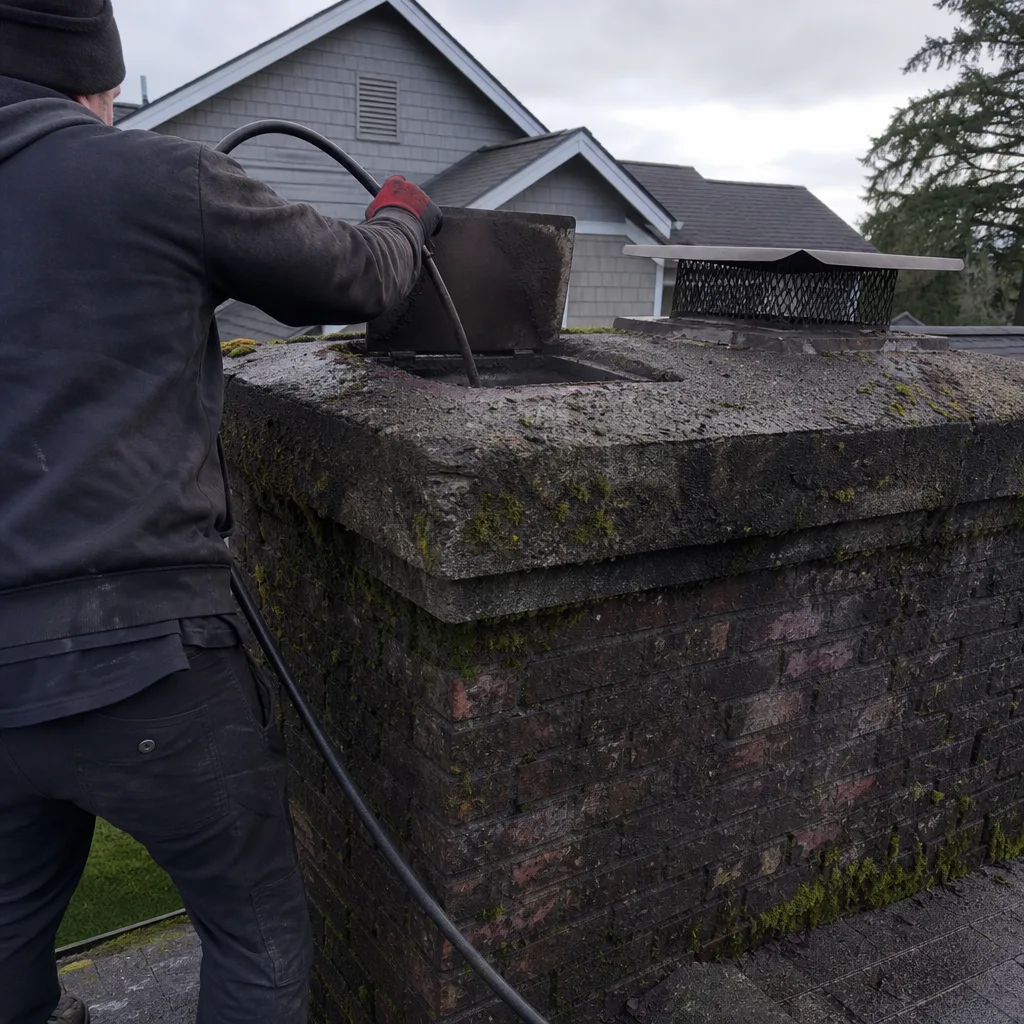 Before
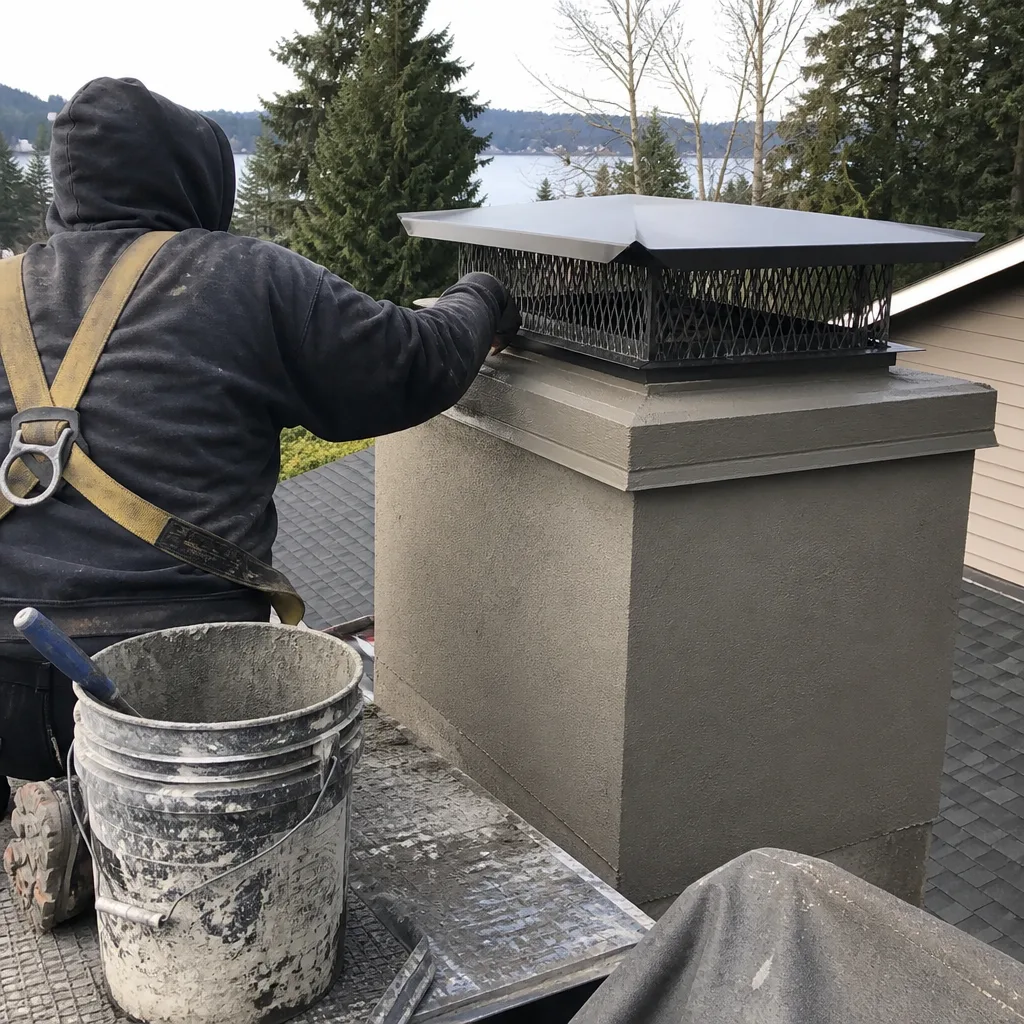 After
After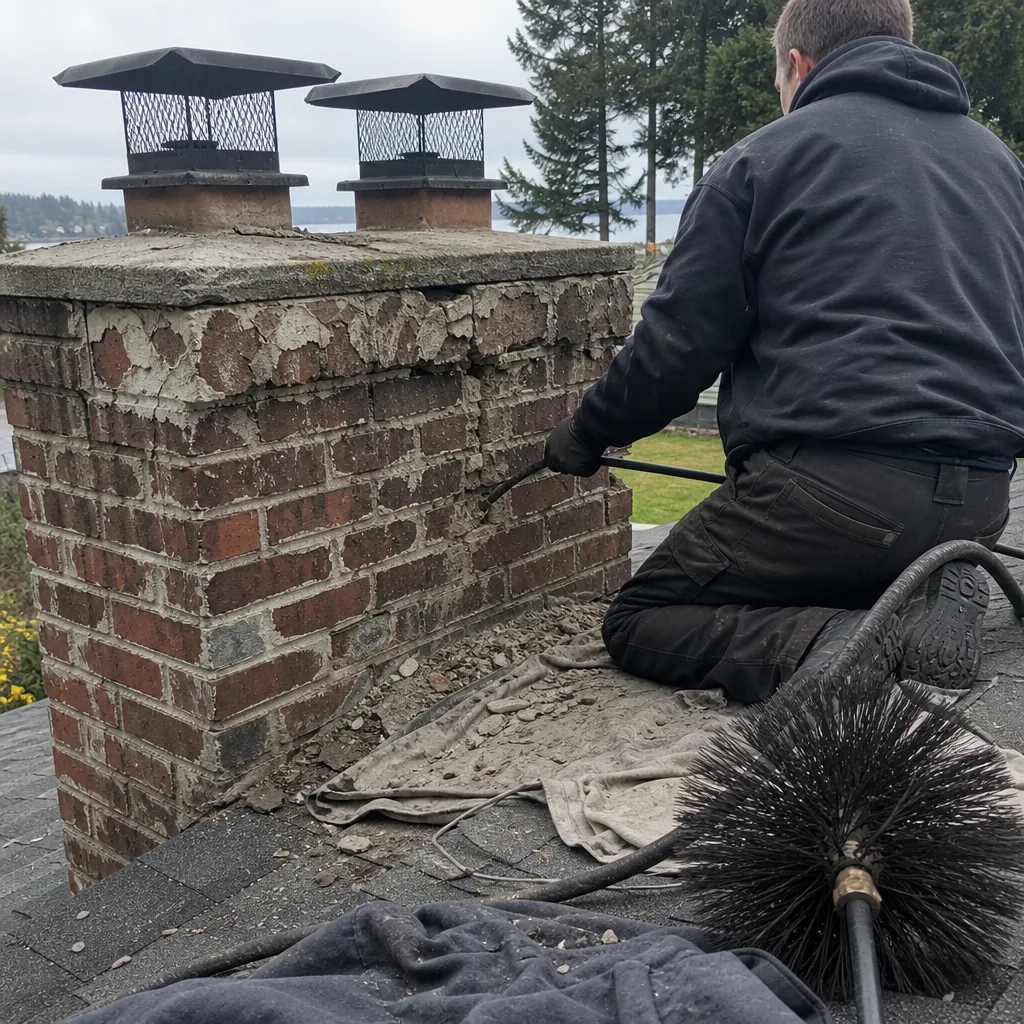 Before
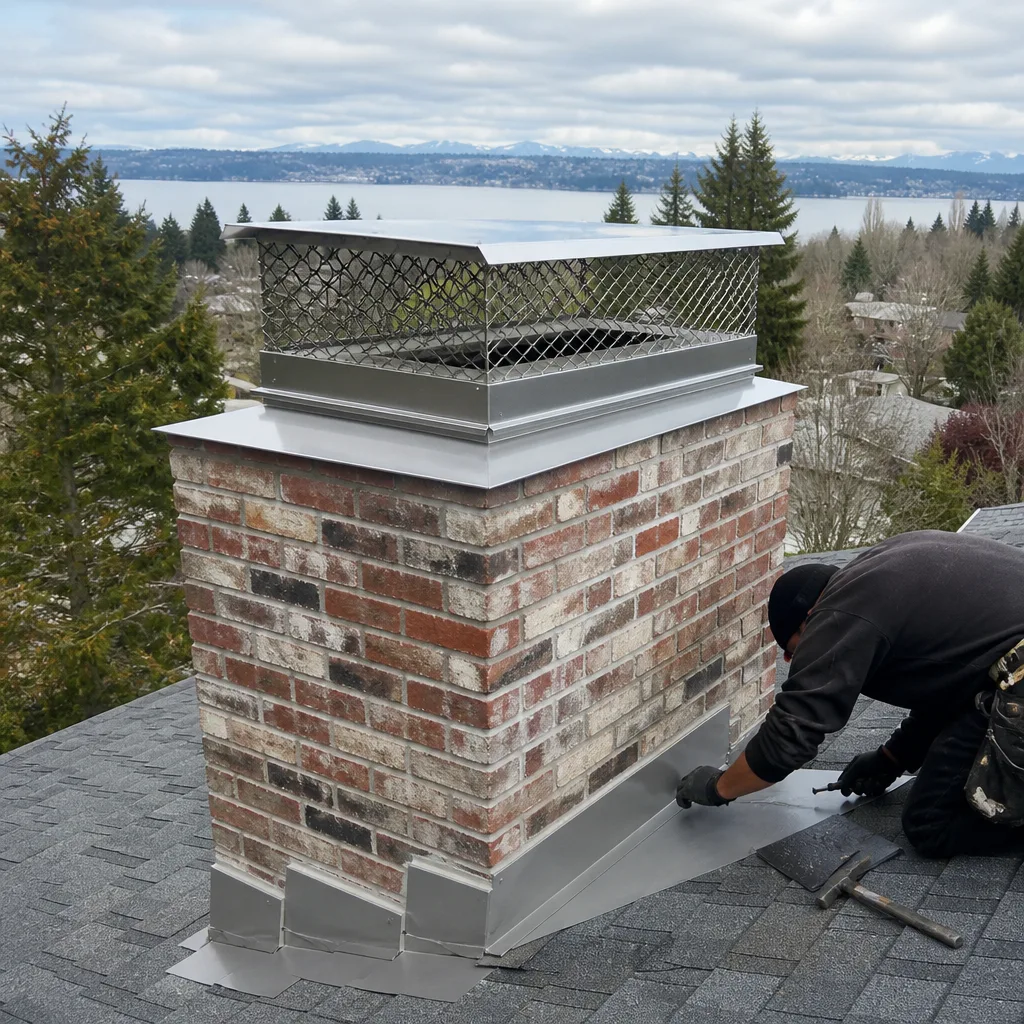 After
AfterChimney Cleaning Permits, Codes & Inspections in WA: What You Need to Know
Here’s the counterintuitive part: chimney cleaning itself almost never needs a permit in Washington. But the repairs that cleaning uncovers - liner replacements, firebox rebuilds, new chase covers - frequently do, and Bellevue homeowners often discover this only when a sale falls through. We’ve completed more than 38,000 chimney inspections since 2009, and we’ve watched earnest money evaporate because a repair done without proper permitting showed up on a pre-closing Level 2 inspection. This guide - alongside our Complete Guide to Chimney Cleaning in Bellevue - explains exactly which chimney work crosses the permit threshold in Washington, what Bellevue’s permit office requires, and how to protect yourself whether you’re staying put or selling next spring.
Quick Answer
Chimney cleaning and routine sweeping do not require a permit anywhere in Washington State. However, liner replacement, firebox reconstruction, structural repairs, and new chimney cap or crown installation typically do require a permit under WAC 51-51 and Bellevue city code. A Chimney Cleaning & Sweep in Bellevue that includes a proper NFPA 211 Level 2 inspection creates the documentation trail that protects sellers, buyers, and insurers from permit surprises.
Table of Contents
- Washington State Chimney Codes: What Governs Your Flue
- Maintenance vs. Alteration: The Permit Threshold
- How Bellevue’s Permit Process Actually Works
- Why a Level 2 Inspection Protects Your Paper Trail
- The Insurance Risk of Undocumented Repairs
- Common Mistakes to Avoid
- When to Call a Professional
- Frequently Asked Questions
 Before
 After
AfterWashington State Chimney Codes: What Governs Your Flue
Washington State adopted the International Residential Code (IRC) with state amendments through WAC 51-51, the Washington State Building Code. For chimneys, this means your flue system must meet Chapter 10 of the IRC as modified by state provisions that address our wet climate, seismic zone, and wood-burning appliance density.
The key sections that affect Bellevue homeowners directly:
- WAC 51-51-1003: Chimney construction standards, including minimum wall thickness, liner requirements, and clearances to combustibles. In Bellevue’s older neighborhoods like Clyde Hill and West Bellevue, we’ve found many 1960s-era chimneys built with single wythe brick and no clay liner - legal when built, but non-compliant if altered today without bringing the entire system to current code.
- WAC 51-51-1004: Factory-built chimney and fireplace requirements. If your home in Crossroads or Newport Hills has a prefab fireplace, any component replacement (firebox, chase cover, termination cap) triggers this section.
- WAC 51-51-1005: Masonry heater standards, relevant for the custom homes on the Somerset plateau where Russian or Finnish masonry heaters were installed during the 1990s building boom.
- Bellevue City Code Chapter 23.06: Local amendments that add permit requirements for any structural modification to a chimney, including chase reconstruction above the roofline and seismic anchoring improvements.
Here’s what most competitors miss: WAC 51-51 doesn’t just govern new construction. It governs alterations to existing systems. When we find spalling brick in a Bridle Trails chimney and recommend crown rebuilding, that rebuild must meet current code - not the code from when the home was built. The permit office enforces this by requiring plans that show compliance with current clearances, liner sizing, and termination height.
Bellevue’s climate compounds the code issues. Our 37+ inches of annual rainfall, combined with freeze-thaw cycles from November through March, accelerates crown deterioration and liner failure. A chimney that passed inspection in drier Eastern Washington might fail in Bellevue after three wet winters. The code recognizes this implicitly through its emphasis on weatherproofing and liner integrity, but it doesn’t grandfather in deteriorated systems.
Maintenance vs. Alteration: The Permit Threshold
This distinction determines whether you’re writing a check for the work alone, or for the work plus permits, drawings, and inspections. We’ve found that most Bellevue homeowners - and frankly, some chimney companies - don’t understand where the line sits.
Maintenance: No Permit Required
These activities are classified as routine maintenance under WAC 51-51 and Bellevue’s administrative code:
- Chimney sweeping and creosote removal: Mechanical brushing of the flue, smoke chamber, and firebox to remove combustible deposits. This includes Chimney Cleaning & Sweep in Bellevue services that use rotary chains, polypropylene brushes, or chemical treatments for Class III glazed creosote.
- Fireplace cleaning: Ash removal, damper lubrication, and glass panel cleaning on factory-built units.
- Cap and spark arrestor cleaning: Removal of debris, nesting material, or corrosion from existing caps without replacement.
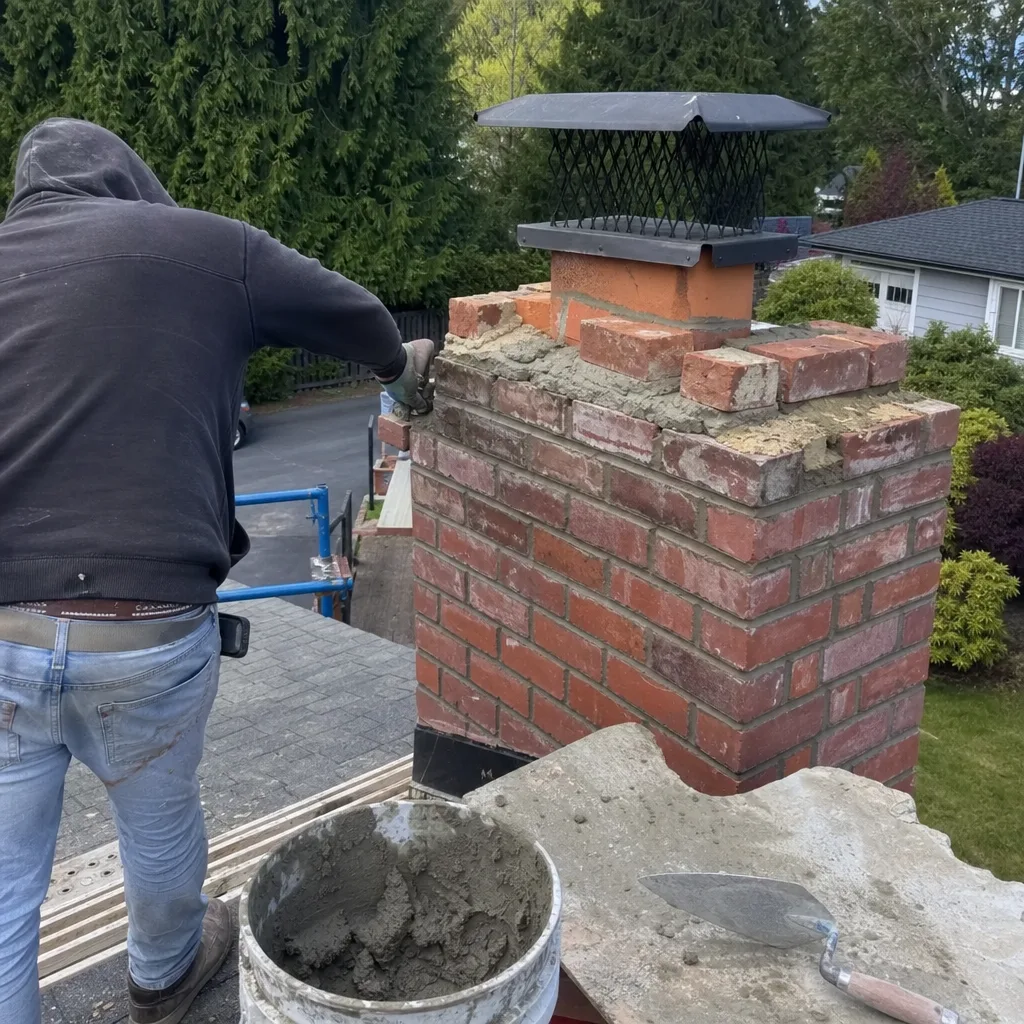
- Minor mortar repointing: Tuckpointing of deteriorated mortar joints up to 10% of the chimney’s surface area, provided no structural elements are exposed or modified. In Bellevue’s Enatai neighborhood, we’ve performed this on 1980s chimneys where the mortar was simply weathered - no permit needed.
- Sealant application: Crown sealant or water repellent on masonry that doesn’t involve rebuilding or structural modification.
Alteration: Permit Required
These activities trigger permit requirements in Bellevue:
- Liner replacement or relining: Installing a new stainless steel liner (we source DuraFlex and Olympia Chimney products through our Haven buying network), cast-in-place liner, or direct-connect insert venting. This is the most common permit-triggering repair we find during Bellevue inspections. The permit office requires a mechanical permit, contractor licensing verification, and often a combustion air calculation.
- Firebox reconstruction: Rebuilding cracked or shifted firebrick, replacing a damaged throat damper with a top-sealing model, or modifying smoke chamber dimensions. In Lake Hills, we reconstructed a firebox in a 1974 ranch where thermal expansion had cracked the rear wall - permit required, inspection scheduled, documented photo record delivered under Haven Standard Clause 4.
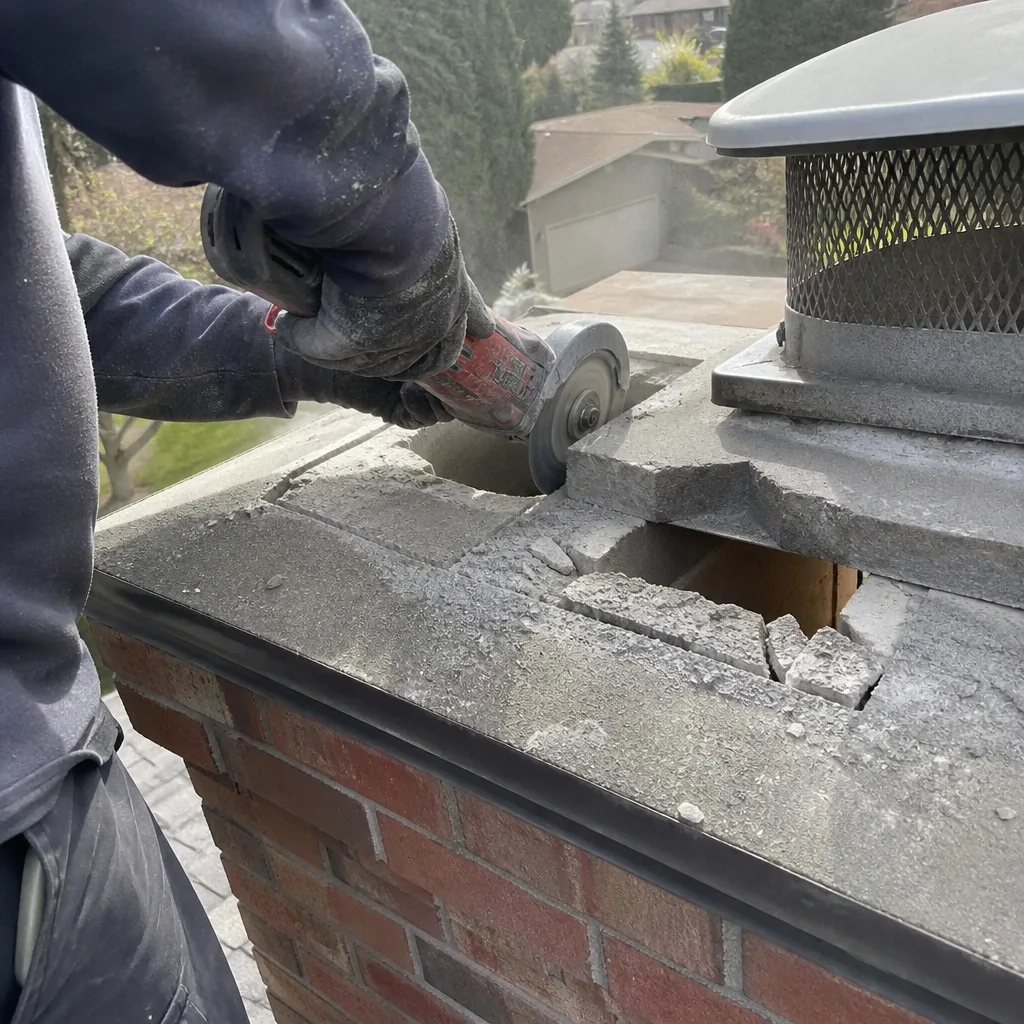
- Crown replacement or rebuild: When deterioration extends beyond surface sealant to requiring form-and-pour concrete or preformed crown installation. Bellevue’s permit office classifies this as structural modification.
- Chase cover or chase reconstruction: Replacing a rusted galvanized chase cover with custom-fabricated steel (we use Famco and Copperfield materials), or rebuilding the wood chase framing above the roofline.
- Chimney cap installation on previously uncapped flues: While cap replacement is maintenance, new installation on an open flue may require evaluation of spark arrestor compliance and termination clearances.
- Structural repairs: Spalled brick replacement, leaning chimney stabilization, or seismic anchoring improvements. Bellevue’s location in seismic design category D0 makes this particularly relevant - older homes in the Wilburton area often need anchoring upgrades that weren’t required at construction.
The gray zone that trips people up: partial liner repair. If we’re patching a 3-foot section of damaged stainless liner in a Factoria chimney, that’s technically maintenance (for warning signs that indicate deeper issues, see our Chimney Cleaning Warning Signs: A Bellevue Homeowner’s Reference Guide). But if that patch connects to a new insert with different venting requirements, the entire system becomes an alteration. We always document the pre-existing condition with camera footage before any work begins - Haven Standard Clause 4 - so the classification is defensible if questioned.
How Bellevue’s Permit Process Actually Works
We’ve pulled hundreds of permits for chimney work in Bellevue. Here’s what actually happens, step by step, so you know what to expect and what your contractor should handle.
Step 1: Determine Permit Type
Bellevue’s Development Services Department classifies chimney work under either:
- Mechanical Permit: For liner replacements, insert installations, and factory-built chimney component replacements. This is the most common type for the work we perform.
- Building Permit: For structural repairs, masonry rebuilds, chase reconstruction, or any work affecting load-bearing elements or seismic bracing.
- Combination Permit: For projects spanning both categories, such as a full chimney rebuild with new liner and cap system.
Step 2: Prepare Submittal Documents
Bellevue requires specific documentation that many contractors fail to prepare correctly:
- Scaled drawings: Cross-section of the chimney showing existing and proposed conditions, including flue dimensions, liner specifications, clearances to combustibles, and termination height above roofline. For homes in the Somerset hills with complex rooflines, we often need multiple elevation views.
- Manufacturer specifications: Cut sheets for all listed components - liner (DuraFlex, Olympia Chimney), cap (Gelco, Famco), crown sealant (HeatShield), or other materials. These must show UL 1777 or applicable listing.
- Contractor information: Washington State contractor registration number, electrical or mechanical license if applicable, and proof of insurance. We display our license on every page and provide it with every permit application.
- Property survey or site plan: Showing chimney location relative to property lines and neighboring structures, required for setback verification in dense neighborhoods like Old Bellevue.
- Homeowner authorization: Signed permit application if the contractor is pulling the permit on the owner’s behalf, which we do as standard practice.
Step 3: Submit and Pay Fees
Bellevue accepts online submittal through MyBuildingPermit.com or in-person at City Hall, 450 110th Avenue NE. Mechanical permit fees for chimney liner replacement typically run $200-$400 depending on project value. Building permits for structural work scale higher. We include permit costs in our written price before work starts - Haven Standard Clause 1 - so there’s no surprise.
Step 4: Schedule Inspections
Bellevue requires progressive inspections for most chimney work:
- Rough-in inspection: For liner installations, before final connections are made and before enclosure. The inspector verifies clearances, support spacing, and proper sizing.
- Final inspection: After all work is complete, accessible, and operational. For factory-built installations, this includes operational testing of the appliance.
- Special inspection: For seismic anchoring or structural modifications, sometimes requiring a third-party engineer’s report.
Inspection scheduling is done online or by phone. Typical availability is 3-5 business days out, though peak seasons (September-November) can stretch to two weeks. We coordinate scheduling as part of our project management - the homeowner doesn’t need to be present for most chimney inspections if we’ve arranged access.
Step 5: Close Permit and Record
After final inspection approval, Bellevue issues a Certificate of Completion. This document should be kept with your home records. When we complete a permitted job, we provide the homeowner with a copy of the Certificate, the inspection reports, and our documented photo record - all part of Haven Standard Clause 4’s archival requirement.
Here’s the critical detail competitors omit: open permits don’t close automatically. If a contractor pulls a permit, does the work, but never calls for final inspection, the permit remains open. In Bellevue’s system, this shows up on title searches and can delay or kill a sale. We’ve been called to close out permits that other companies abandoned - a service we provide, though it’s simpler to do it right the first time.
Why a Level 2 Inspection Protects Your Paper Trail
Not all inspections are equal. The NFPA 211 standard defines three levels, and the difference between Level 1 and Level 2 is the difference between a flashlight glance and a documented, camera-verified assessment that holds up in real estate transactions, insurance claims, and permit applications.
What a Level 2 Inspection Actually Includes
Under NFPA 211, a Level 2 inspection requires:
- Visual examination of accessible portions: Interior and exterior, including attics, crawl spaces, and basements where chimney structure is visible. In Bellevue’s hillside homes with daylight basements, this often reveals hidden structural issues invisible from the living space.
- Camera scan of the flue interior: Video documentation from firebox to termination, examining liner condition, joint alignment, creosote deposits, and obstruction. We’ve used this since 2009 - before regulators or insurers required it - and made it Clause 4 of the Haven Standard.
- Clearance verification: Measuring distances to combustible framing, particularly in older homes where insulation or renovation may have reduced original clearances.
- Appliance connection evaluation: Proper sizing, support, and condition of connector pipes and thimbles.
- Written report with documentation: Not a checklist, but a narrative report with photo or video evidence, condition assessment, and recommendations prioritized by safety significance.
How Level 2 Documentation Protects Sellers
In Bellevue’s active real estate market, pre-listing Level 2 inspections have become standard practice for informed sellers. Here’s why:
A Level 2 inspection completed before listing identifies permit-triggering repairs early. The seller can either complete permitted work with proper documentation, or disclose the condition and price accordingly. What you cannot do - what we’ve seen attempted - is hide unpermitted work and hope the buyer’s inspector doesn’t find it.
Buyer’s inspectors in Bellevue are increasingly thorough. Redfin, Zillow, and traditional brokerages all maintain lists of recommended inspectors who perform Level 2 camera scans as standard. When unpermitted liner work is discovered, the typical outcomes are:
- Sale delayed 30-60 days while permits are retroactively pulled and inspected
- Price reduction of $5,000-$15,000 to compensate buyer for permit risk
- Earnest money disputes if the issue emerges after inspection contingency expiration
- Deal cancellation in competitive markets where buyer has alternative options
In 2023, we performed a Level 2 inspection on a Newport Shores home under contract. The seller had replaced the liner three years prior without permits. Our camera scan revealed improper sizing - the liner was undersized for the fireplace opening, a code violation under WAC 51-51-1003. The buyer’s lender required correction before funding. The seller paid for permitted relining plus a $4,000 price reduction. A pre-sale Level 2 inspection would have caught this at the time of original work.
How Level 2 Documentation Protects Buyers
For buyers in Bellevue’s market, where median home prices exceed $1.4 million, a Level 2 inspection is due diligence, not paranoia. The inspection provides:
- Baseline documentation of chimney condition at purchase
- Verification that any recent work was properly permitted and inspected
- Evidence for insurance underwriting, particularly for homes with wood-burning appliances
- Prioritized repair list with safety-critical items identified
How Level 2 Documentation Supports Permit Applications
When permit-triggering repairs are needed, a Level 2 inspection report becomes part of the submittal package. The camera footage demonstrates existing conditions that justify the proposed work. The written report provides the narrative that drawings alone cannot convey. In our experience, permit offices review these packages more quickly and with fewer requests for information when the existing condition is thoroughly documented.
Clause 4 of the Haven Standard requires this documentation on every job - not as an optional add-on, but as standard practice. We’ve maintained this archive since 2009, and it’s why we can often resolve permit disputes or insurance questions years after the original work.
The Insurance Risk of Undocumented Repairs
This is the conversation homeowners don’t want to have until they’re forced to. Homeowner’s insurance policies contain specific provisions about fire cause, maintenance, and alterations. Undocumented chimney repairs create exposure in three specific ways.
Claim Denial for Fire Caused by Chimney Defect
If a chimney fire occurs and investigation reveals that a liner replacement, firebox rebuild, or other alteration was performed without permit or inspection, insurers may deny the claim on grounds of unpermitted modification. The argument: the alteration increased risk, and the insurer wasn’t informed of the changed condition.
We’ve reviewed claim denials where the work itself was competent - properly sized liner, correct clearances, functional installation - but the lack of permit and inspection documentation gave the insurer grounds to decline. In Washington, the Insurance Commissioner has ruled on both sides of this question, but the trend favors insurers when documentation is absent.
Policy Non-Renewal After Inspection
Some insurers now conduct drive-by or requested inspections at renewal, particularly for homes with wood-burning appliances in high-fire-risk areas. Bellevue’s wildland-urban interface zones - the Bridle Trails area, parts of Lakemont - receive heightened scrutiny. An unpermitted chase rebuild or cap installation visible from the street can trigger non-renewal or require retroactive permitting.
Liability Exposure for Previous Owners
In Washington, sellers’ disclosure statements require acknowledgment of unpermitted work “known to the seller.” A Level 2 inspection that reveals unpermitted repairs creates constructive knowledge. Sellers who fail to disclose face potential liability to buyers, particularly if the undisclosed work later contributes to property damage.
The protection is straightforward: permitted work with inspection approval, documented with photos and certificates, disclosed in the sale process. This is why we provide complete documentation packages, not just invoices, for every job we perform.
Common Mistakes to Avoid
- Assuming “maintenance” covers everything a chimney company recommends. In Bellevue, we’ve seen homeowners pay for liner replacement believing it was routine maintenance, only to discover at sale that it required a permit. Ask explicitly: “Does this work require a permit?” Get the answer in writing.
- Accepting verbal assurances that permits “aren’t needed for this.” Contractors who avoid permitting often do so to save time and fees, not because the work is exempt. Bellevue’s permit lookup is public - verify any claim.
- Failing to verify permit closure. An open permit is worse than no permit. After any permitted work, confirm online or by phone that final inspection passed and the permit is closed. We provide Certificate of Completion copies for this reason.
- Skipping the Level 2 inspection before major weather events. Bellevue’s windstorms and freeze-thaw cycles stress chimney systems. A pre-winter Level 2 inspection identifies permit-triggering repairs before they become emergencies. Emergency repairs are harder to permit properly and more expensive.
- Not disclosing unpermitted work when selling. Washington’s Form 17 seller disclosure specifically asks about unpermitted work. Nondisclosure creates liability that can follow you post-sale. Document what you know, get a Level 2 inspection for what you don’t.
- Hiring unlicensed contractors for permit-required work. Bellevue requires licensed contractors for all permitted chimney work. Unlicensed work won’t pass inspection and may void manufacturer warranties on materials like DuraFlex liners or Gelco caps.
- Confusing “inspected” with “permitted.” A chimney company can inspect your flue without permits. But inspection doesn’t legalize unpermitted work. Only permit closure with inspection approval does that.
When to Call a Professional
Call a certified chimney professional when you’re buying a home with a fireplace, preparing to sell, planning any repair beyond sweeping, or if your last inspection was more than a year ago for wood-burning systems. For a full maintenance roadmap, see our Chimney Cleaning & Sweep Maintenance Checklist for Bellevue Homeowners. In Bellevue’s climate, annual Level 2 inspection is prudent for heavily used fireplaces, and essential before any work that might trigger permit requirements.
Chimney Repair in Bellevue that starts with camera documentation, includes a written price before work begins, and ends with proper permitting and inspection - that’s the standard we established under the Haven Standard. Level Two Chimney Bellevue home offers free estimates throughout Bellevue - call (425) 696-0387. We’ll tell you exactly what your chimney needs, what it costs, and whether permits apply before anyone picks up a tool.
Frequently Asked Questions
No. Routine chimney sweeping, creosote removal, and fireplace cleaning are classified as maintenance and do not require permits under WAC 51-51 or Bellevue city code. However, if the sweep uncovers damage requiring liner replacement, firebox rebuild, or structural repair, those subsequent repairs typically do require permits. Call (425) 696-0387 for a free estimate - we’ll identify what needs permits and what doesn’t.
Permitted liner replacement in Bellevue typically ranges from $2,800-$5,500 including materials, labor, permit fees, and inspections. Firebox reconstruction runs $1,500-$4,000. Crown rebuilds range $800-$2,500. These ranges include Bellevue’s permit fees ($200-$400 for mechanical, higher for structural) and the required inspections. We deliver a written price before work starts - Haven Standard Clause 1 - with permit costs itemized, not hidden. Call (425) 696-0387 for an exact quote on your specific chimney.
Check Bellevue’s online permit history at MyBuildingPermit.com or call Development Services at (425) 696-0387. Enter the property address and search “mechanical” and “building” permit types. Look for final inspection status - “approved” means closed; “open” or “no final” means incomplete. If you find unpermitted work, a Level 2 inspection can assess whether it meets current code. We provide free second opinions on any written estimate, including retroactive permit assistance.
A chimney inspection (NFPA 211 Level 1, 2, or 3) evaluates safety and function - it’s performed by a chimney professional and paid by the homeowner. A permit inspection is performed by a city building inspector to verify code compliance - it’s required for permitted work and included in permit fees. In Bellevue, both may be needed: our Level 2 inspection identifies the problem, the permit inspection verifies the repair meets code. Our documented photo record from Clause 4 often expedites the city’s inspection process.
You can, but you must disclose it on Form 17, and buyers will likely negotiate price reductions or require permitted correction. In Bellevue’s competitive market, unpermitted work is a significant liability. We’ve seen $10,000+ reductions for unpermitted liner replacements that would have cost $300 in permit fees. Pre-listing Level 2 inspection and proactive permitting protects your sale price. Call (425) 696-0387 if you’re considering selling in the next two years.
For wood-burning fireplaces used regularly (more than 30 fires per season), annual sweeping is recommended under NFPA 211. In Bellevue’s wet climate, even occasional-use chimneys benefit from annual Level 2 inspection to catch moisture-related deterioration before it requires permitted repair. Gas fireplaces need less frequent cleaning but should be inspected every 1-2 years for venting integrity. Our 38,000+ inspections since 2009 show that Bellevue chimneys deteriorate faster than drier-climate equivalents - the inspection interval matters.
Skipped maintenance leads to creosote accumulation, which increases chimney fire risk and accelerates liner deterioration. In Bellevue, we’ve removed Class III glazed creosote from chimneys that hadn’t been swept in five years - the removal required chemical treatment and often reveals cracked liners that need permitted replacement. The cost of deferred maintenance typically exceeds proactive care by 3-5x. More critically, insurance claims after chimney fires in unmaintained systems face higher denial rates. A Fireplace Services in Bellevue inspection costs far less than the alternatives.
The Bottom Line
Chimney cleaning doesn’t need a permit in Washington, but the repairs it reveals frequently do. The critical distinction is maintenance versus alteration - sweeping versus rebuilding. Bellevue’s permit process is navigable but specific, and the documentation gap between a flashlight inspection and a Level 2 camera scan is often the gap between a smooth home sale and a failed transaction. For homeowners, the protective steps are simple: annual Level 2 inspection, explicit written confirmation of permit status before any repair, verification of permit closure, and retention of all documentation. Explore our more guides & resources for additional Bellevue-specific chimney advice. For work that matters, we’ve believed since 2009 that evidence beats reassurance every time.
Written by Corrine Halstead, Owner at Level Two Chimney Bellevue, serving Bellevue since 2009.